
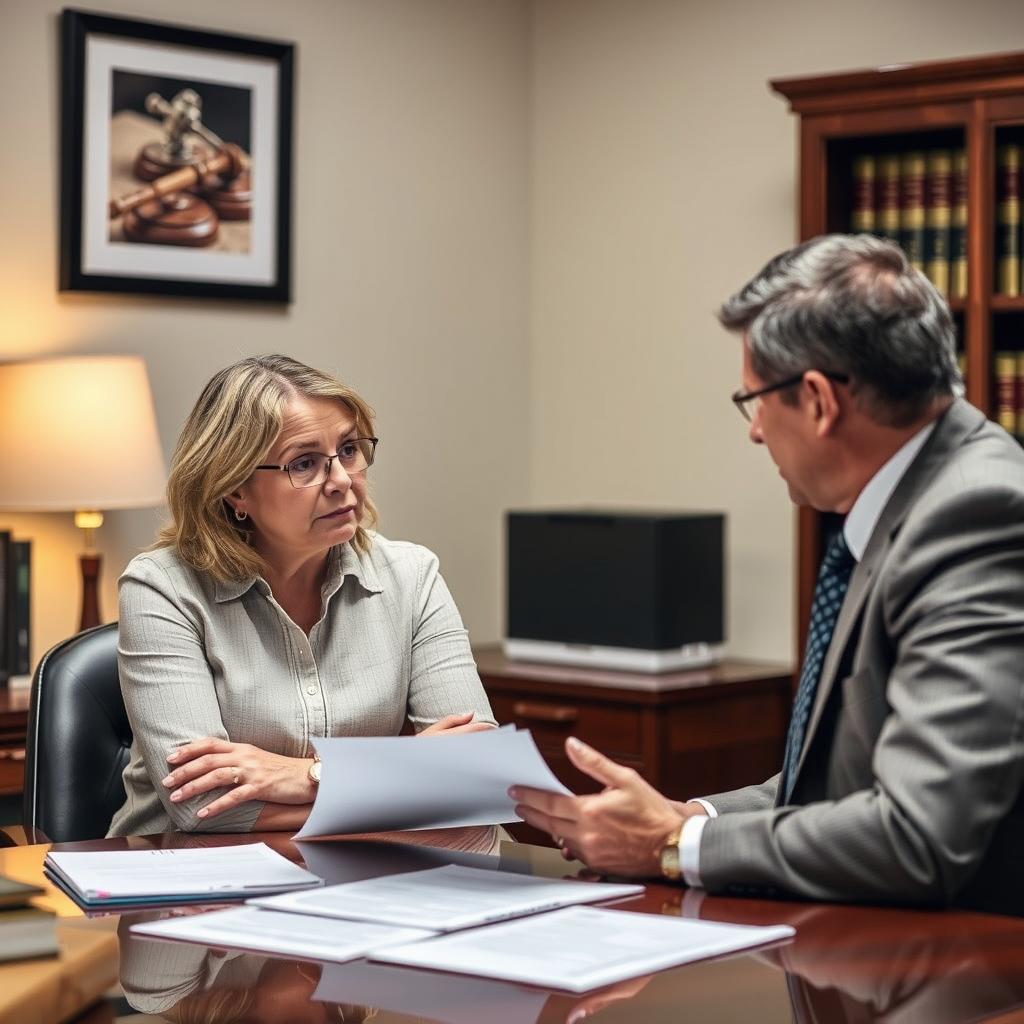
Uncontested Divorce Lawyer Prince George County, VA
An uncontested divorce allows spouses in Prince George County, Virginia to dissolve their marriage without contested hearings when both agree on all issues. The Prince George County Circuit Court—located at 6601 Courts Drive, Prince George, Virginia—has exclusive jurisdiction over divorce, while the Juvenile and Domestic Relations District Court handles separate custody, support, and protective-order matters. Virginia law provides specific no-fault and fault-based grounds under Va. Code § 20-91, and property division follows equitable-distribution principles. A residency requirement of six months applies under Va. Code § 20-97. Whether you are considering a separation agreement or have already met the separation period, working with a lawyer who understands both the statutory framework and the local court’s practices can help the process move forward efficiently. To discuss an uncontested divorce in Prince George County, contact Law Offices Of SRIS, P.C. at (888) 437-7747.
What Uncontested Divorce Means in Prince George County, Virginia
An uncontested divorce in Virginia is one in which both spouses sign a written separation agreement that resolves all property, support, and custody issues, and at least one spouse presents the agreement to the court for entry of a final decree. The most common no-fault ground used in Prince George County is six months of separation without minor children and with a signed agreement, under Va. Code § 20-91(9)(b). For spouses who have minor children or who have not signed an agreement, a one-year separation ground exists under Va. Code § 20-91(9)(a). Fault grounds—such as adultery, cruelty, desertion for one year, or a felony conviction with a sentence of more than one year—remain available, but uncontested cases rarely rely on them.
The Prince George County Circuit Court hears all divorce and equitable-distribution matters. Virginia is an equitable-distribution state, meaning the court divides marital property fairly but not necessarily equally, based on 11 factors. Spouses who resolve their own issues through a separation agreement retain control over the outcome and typically avoid the time and expense of a contested trial. The Juvenile and Domestic Relations District Court handles any stand-alone custody, visitation, or support issues. Because Virginia requires corroboration of the separation date, having an experienced lawyer guide the process helps ensure the court requirements are met and that the final decree is properly entered.
How Mr. Sris and His Of Counsel Handle Uncontested Divorce Cases
Mr. Sris and his Of Counsel approach an uncontested divorce as a document-driven resolution that still requires careful attention to legal details. The process begins with a thorough review of the separation agreement—covering property classification, spousal support, child custody, and support—to confirm it complies with Virginia law and will withstand court scrutiny. The firm works to identify potential issues, such as retirement-account division or business interests, before the agreement is signed. Once the separation period has run, counsel prepares the complaint and all required filings for the Prince George County Circuit Court, arranges for a corroborating witness, and schedules the final hearing.
Because the firm appears regularly in Prince George County courts, Mr. Sris and his Of Counsel are familiar with the local procedural expectations. They can also handle related matters that occasionally arise during an uncontested case, such as pendente lite orders under Va. Code § 20-103, in the event a temporary support or custody issue needs attention. The goal is to move the matter to a final decree efficiently while protecting the client’s rights under Virginia’s equitable-distribution and support statutes. Every case is different, and the firm tailors its approach to the specific facts of the marriage and the financial circumstances involved.
About Mr. Sris and His Of Counsel Team
Mr. Sris, Owner and Founder of Law Offices Of SRIS, P.C., established the firm in 1997. A former prosecutor, he concentrates on family law and divorce matters across Virginia and four other jurisdictions. Mr. Sris testified before the Virginia House Courts of Justice Committee in support of 2019 HB 635 (chief patron Del. David Bulova), the legislation that revised the equitable-distribution provisions of Va. Code § 20-107.3. His deep familiarity with Virginia’s property-division statute, combined with over 25 years of practice, gives clients the benefit of counsel who understands both the legislative intent and the practical application of the law. Mr. Sris and his Of Counsel bring over 120 years of combined legal experience and have achieved 4,739+ documented firm-wide results. Results may vary.
The firm’s Of Counsel attorneys are experienced litigators and negotiators who contribute to the preparation of separation agreements, child-support calculations, and court filings. They are admitted in Virginia, Maryland, the District of Columbia, New Jersey, and New York, and the firm maintains locations in Fairfax, Richmond, Ashburn, Arlington, Rockville, Maryland, Tinton Falls, New Jersey, and Buffalo, New York. The team is supported by staff who speak English, Spanish, and Tamil. In every uncontested divorce, Mr. Sris and his Of Counsel work to resolve the matter thoroughly and with the client’s long-term financial and family interests in mind.
Frequently Asked Questions
What is an uncontested divorce in Virginia?
An uncontested divorce in Virginia occurs when both spouses agree on all issues—property division, support, and custody—and submit a signed separation agreement to the court. The divorce is granted on a no-fault ground after the required separation period has run, typically six months with a written agreement and no minor children, or one year otherwise. Because the parties have resolved all disputes, the court hearing is short, usually requiring only one spouse and a corroborating witness to testify that the separation has been continuous. An uncontested divorce avoids the expense and uncertainty of a contested trial, making it an efficient way to dissolve a marriage.
How long does an uncontested divorce take in Prince George County?
The timeline for an uncontested divorce varies depending on the court’s calendar and the completeness of the filings. Once the separation period required by Virginia law is satisfied and the separation agreement is signed, the attorney can prepare the complaint and schedule a hearing. The Prince George County Circuit Court sets the hearing date based on its docket. In most cases, the final decree can be entered within a few months after filing, but every case is different. Promptly addressing any missing documents or errors in the agreement helps avoid unnecessary delays.
Do I need a lawyer for an uncontested divorce in Virginia?
You are not required to have a lawyer for an uncontested divorce, but an attorney helps ensure the agreement is legally sound and the court requirements are met. Even when both spouses agree, Virginia’s equitable-distribution law and the rules for classifying marital and separate property can be complex. A lawyer can review the separation agreement to confirm it addresses retirement accounts, tax consequences, and support obligations correctly, reducing the likelihood that the agreement will be rejected by the court or challenged later. An attorney also handles the procedural steps, including the requirement of a corroborating witness, and appears at the final hearing.
What are the grounds for an uncontested divorce in Virginia?
An uncontested divorce is typically based on a separation period of six months or one year under Va. Code § 20-91, with a signed separation agreement. The six-month no-fault ground applies only if the couple has no minor children and has executed a written agreement resolving all issues. If minor children are involved or no agreement has been signed, the one-year separation ground is used. Fault grounds such as adultery or cruelty are available but are not necessary for an uncontested divorce. The case is filed in the Prince George County Circuit Court, which has exclusive jurisdiction over divorce under Va. Code § 20-96.
How is property divided in an uncontested divorce in Virginia?
Virginia is an equitable-distribution state, meaning marital property is divided fairly but not necessarily equally. In an uncontested divorce, the spouses decide the division themselves in the separation agreement, subject to the court’s approval. The court will review the agreement to ensure it is conscionable and consistent with the factors. Separate property—assets owned before the marriage or received by gift or inheritance—remains with the owning spouse. Pensions, business interests, and real estate require careful handling, and a well-drafted agreement can address future valuation and transfer issues.
What should I bring to a consultation about an uncontested divorce?
Bring a list of assets and debts, income information, and any existing separation agreement or prior court orders. Also helpful are tax returns, retirement account statements, property deeds, and a timeline of the separation date. The more complete the financial picture, the better counsel can evaluate whether the proposed division is fair under Virginia law. If no agreement has been drafted yet, the consultation can focus on the key issues—custody, support, and property classification—so that the parties can begin negotiating with a clear understanding of the legal framework.
Explore our practice in nearby areas:
Fairfax County Family Law ·
Prince William County Family Law ·
Manassas Family Law ·
Virginia Family Law Overview
Primary law sources:
Virginia Code Title 20 – Domestic Relations ·
Prince George County Circuit Court ·
Virginia’s Judicial System
Attorney advertising. Prior results do not guarantee a similar outcome. Results may vary.
Case results depend on a variety of factors unique to each case.