
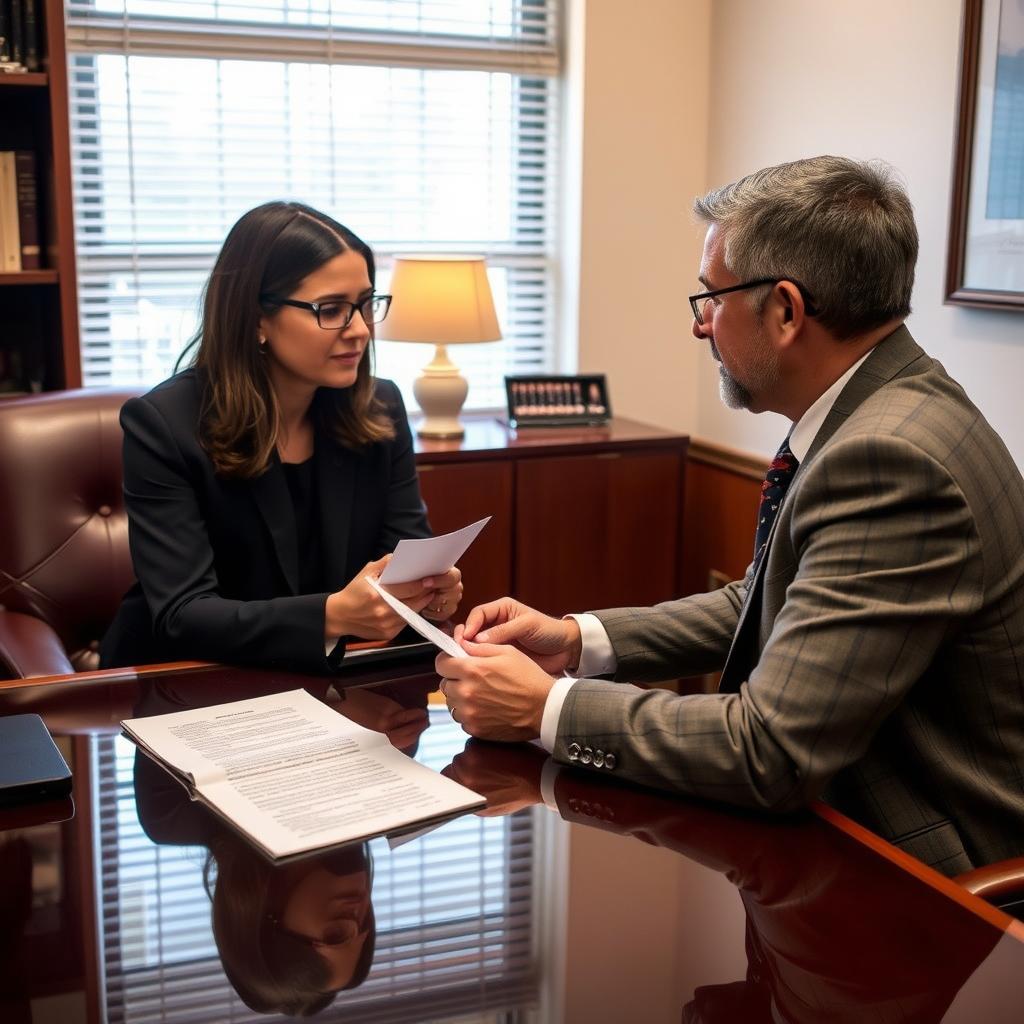
Supervised Visitation Lawyer Chesterfield County, VA
Supervised visitation is a court-ordered arrangement in which a parent’s time with their child is monitored by a neutral third party. Courts in Chesterfield County, Virginia enter such orders when they find that unsupervised parenting time could place a child at risk. Whether you are seeking supervised visitation to protect your child or you are the parent who must comply with a supervision order, the process demands a clear understanding of Virginia law and the local procedures followed in Chesterfield County. Law Offices Of SRIS, P.C. represents clients in supervised visitation matters throughout the Twelfth Judicial District. Mr. Sris and his Of Counsel team work to present the facts fully and to advocate for arrangements that serve the child’s best interests while protecting each parent’s relationship with the child. To speak with an attorney about your supervised visitation concerns, reach our firm at (888) 437-7747. Law Offices Of SRIS, P.C. – Advocacy Without Borders.
What Supervised Visitation Means in Chesterfield County, Virginia
Supervised visitation orders in Chesterfield County are entered by the Chesterfield County Juvenile and Domestic Relations District Court when custody and visitation are addressed outside of a divorce, or by the Chesterfield County Circuit Court when visitation is part of a divorce and equitable distribution proceeding. Both courts sit at the Chesterfield County Courthouse, 9500 Courthouse Road, Chesterfield, Virginia 23832. The governing statute is Virginia Code § 20-124.2, which recognizes that a parent’s visitation rights may be limited or conditioned when the court determines that unrestricted parenting time would endanger the child’s health, safety, or welfare. The court applies the trusted‑interests‑of‑the‑child factors listed in Virginia Code § 20-124.3, weighing whether a parent’s conduct, living situation, substance use, mental health, or history of domestic violence requires the presence of a supervisor during visits.
The types of supervision ordered can vary. A relative or family friend may be approved as a supervisor, or the court may direct visits to occur at a professional visitation center. In some matters the court places conditions—such as sobriety monitoring or completion of parenting classes—that, once satisfied, can lead to a request to modify the supervision requirement. Our Richmond Location serves clients in Chesterfield County communities including Midlothian, Chester, Colonial Heights, Bon Air, Brandermill, and Moseley, and Mr. Sris and his Of Counsel are familiar with the expectations of the local bench and the resources available in the area.
How Mr. Sris and His Of Counsel Handle Supervised Visitation Cases
When supervised visitation is at issue, the first steps usually involve a careful review of the circumstances that led to the court’s concern. Mr. Sris and his Of Counsel gather police reports, protective‑order records, mental‑health evaluations, and witness statements, and assess whether the evidence supports or challenges the need for supervision. They also work to identify practical alternatives—such as a trusted family member as supervisor or a step‑down plan—that may satisfy the court’s safety concerns while allowing a more natural parent‑child relationship to develop over time.
If the parents can agree on a supervision arrangement, the team drafts a stipulation or proposed order that reflects the agreed terms. When agreement is not possible, they prepare for a contested hearing before the Chesterfield County Juvenile and Domestic Relations District Court or the Chesterfield County Circuit Court. At the hearing, they present evidence, examine witnesses, and argue the legal standards under Virginia Code § 20-124.2 and § 20-124.3. Throughout the process, the team works to protect the child’s well‑being while preserving the parent‑child bond. Every supervised‑visitation matter is fact‑specific, and the approach is tailored to the unique dynamics of the family and the judge’s perspective in the particular court.
About Mr. Sris and His Of Counsel Team
Law Offices Of SRIS, P.C. was founded in 1997 by Mr. Sris, Owner and Founder. Mr. Sris is a former prosecutor who now concentrates his practice on family law, criminal defense, and related litigation. He is admitted to practice in Virginia, Maryland, the District of Columbia, New Jersey, and New York. Mr. Sris works closely with his Of Counsel team—attorneys engaged through Excella—who bring extensive courtroom experience to every matter. Together, Mr. Sris and his Of Counsel have documented over 120 years of combined legal experience, with over 4,739+ documented firm-wide results, and have handled thousands of family‑law cases across multiple jurisdictions. Results may vary. In any individual case.
Frequently Asked Questions
What is supervised visitation in Virginia?
Supervised visitation is a court‑ordered parenting‑time arrangement in which a neutral third party monitors all contact between a parent and a child. The supervisor may be a professional, a family member, or a mutually agreed‑upon individual. Supervised visitation is used when the court finds that unsupervised contact could harm the child’s physical or emotional well‑being. Virginia law authorizes courts to impose restrictions on visitation under Virginia Code § 20‑124.2. The goal of supervised visitation is not to permanently sever the parent‑child relationship but to ensure safety while allowing the parent to work toward resolving the concerns that prompted the supervision order. A parent subject to supervision can later petition the court to lift or modify the restriction if circumstances improve.
When does a court order supervised visitation in Chesterfield County?
A Chesterfield County court may order supervised visitation when it finds that a child’s health, safety, or welfare requires monitoring during parenting time. Common reasons include a history of domestic violence, untreated substance abuse, mental‑health instability, neglect, or a parent’s prolonged absence from the child’s life. The judge applies the trusted‑interests‑of‑the‑child factors in Virginia Code § 20‑124.3 and determines whether supervision is necessary. The Chesterfield County Juvenile and Domestic Relations District Court handles standalone visitation cases, while the Chesterfield County Circuit Court addresses visitation when it is part of a divorce. Both courts can impose supervision gradually and may set conditions, such as drug testing or counseling, that must be met before unsupervised visits resume.
How can a parent modify or end supervised visitation?
A parent can ask the court to modify or remove a supervision requirement by filing a motion showing that circumstances have materially changed. For example, a parent who completes a substance‑abuse treatment program, maintains sobriety, or completes anger‑management counseling may demonstrate that supervision is no longer necessary. The motion is filed in the court that issued the original order—either the Chesterfield County Juvenile and Domestic Relations District Court or the Chesterfield County Circuit Court. The parent requesting the change bears the burden of proving that the modification serves the child’s best interests. An experienced attorney can help gather documentation, present progress reports, and propose a step‑down plan that gradually reduces supervision while giving the court confidence that the child remains safe.
Do I need a lawyer for a supervised visitation case?
You are not required to have a lawyer for a supervised‑visitation dispute, but legal representation helps ensure that the facts are fully presented to the court and that your parental rights are protected. Supervised visitation cases often involve sensitive evidence, including police records, mental‑health assessments, and statements from third parties. An attorney can evaluate whether the evidence supports or opposes supervision, examine witnesses at a hearing, and negotiate an alternative arrangement that may satisfy the court’s safety concerns without the need for prolonged litigation. For guidance on your specific situation, reach Law Offices Of SRIS, P.C. at (888) 437‑7747 to request a consultation.
How does the court decide on supervised visitation?
The court decides whether to order supervised visitation by applying the statutory best‑interests‑of‑the‑child factors in Virginia Code § 20‑124.3 and by examining the evidence of any risk the parent may pose. The judge reviews testimony, affidavits, reports from guardian ad litem, and records from law enforcement or social services. The court’s primary focus is the child’s safety. If there is credible evidence of physical abuse, severe substance dependency, or a pattern of endangering behavior, supervision may be ordered as a protective measure. The court can also consider whether a relative or a professional center is available to provide supervision. Because each case is fact‑specific, the judge has broad discretion in shaping the visitation order. To discuss the details of your matter, contact Law Offices Of SRIS, P.C. at (888) 437‑7747.
Can supervised visitation be avoided?
Supervised visitation can sometimes be avoided if the court is convinced that alternative safeguards sufficiently protect the child. For instance, a parent may offer to limit visits to daytime only, to conduct exchanges at a neutral location, or to have a family member present informally—arrangements that fall short of formal supervision but still address the court’s concerns. In other cases, the parent may agree to use a professional parenting‑time monitor voluntarily to demonstrate reliability before a hearing occurs. Mr. Sris and his Of Counsel negotiate these alternatives with opposing counsel and present them to the court. If the judge accepts an alternative, no formal supervision order is entered. For a consultation, reach Mr. Sris and his Of Counsel at (888) 437‑7747.
Attorney advertising. Prior results do not guarantee a similar outcome. Results may vary.
Case results depend on a variety of factors unique to each case.