
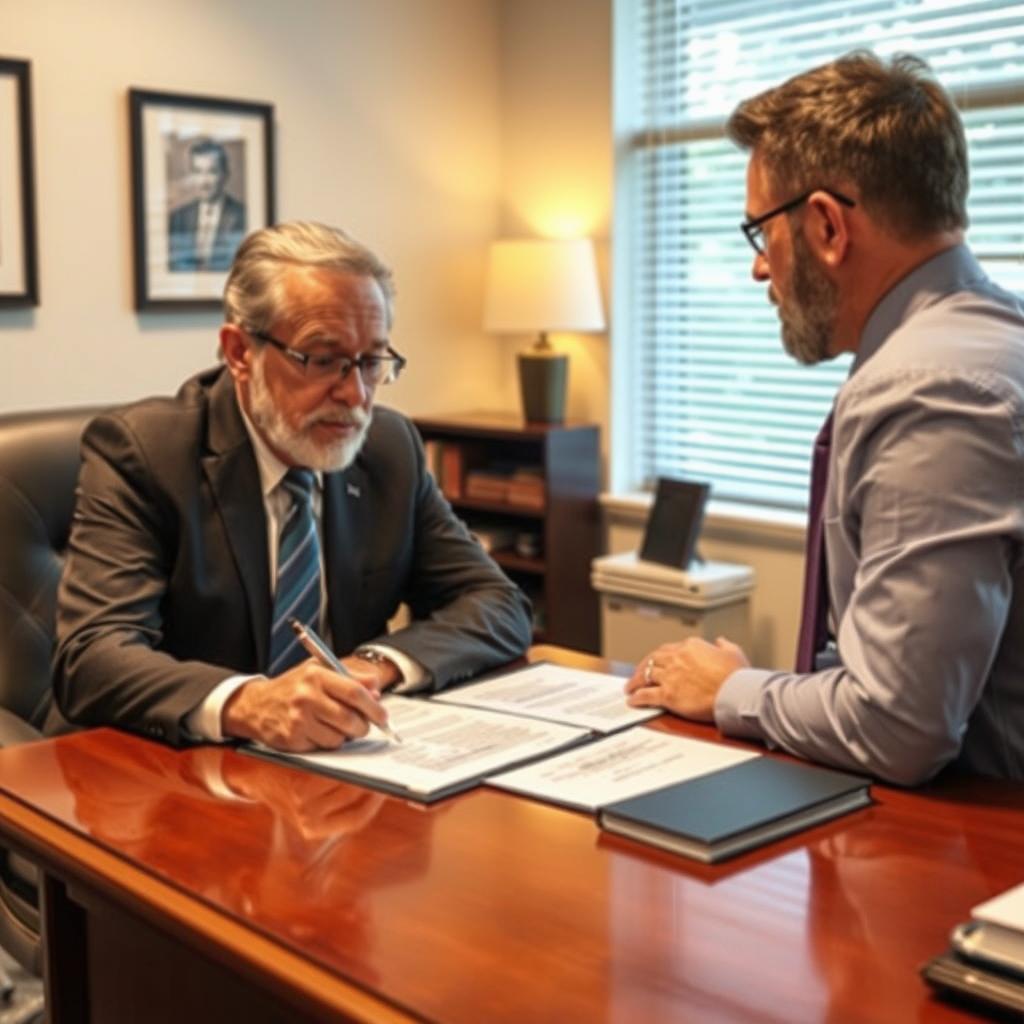
Property Settlement Lawyer Colonial Heights, VA
Property settlement in Colonial Heights, Virginia, involves the division of marital assets and debts under the Commonwealth’s equitable distribution statute, Va. Code § 20‑107.3. When a marriage ends, the Colonial Heights Circuit Court—located at 550 Boulevard—has exclusive jurisdiction over divorce and property division, while the Colonial Heights Juvenile & Domestic Relations District Court handles related custody and support matters. Mr. Sris and his Of Counsel team at Law Offices Of SRIS, P.C. assist clients in the Colonial Heights area, including the Swift Creek and Petersburg border communities, with the classification, valuation, and distribution of marital property. Whether your case involves a family home, retirement accounts, a family business, or complex financial holdings, having an experienced property settlement attorney who understands local court expectations and the statutory framework can make a meaningful difference. To discuss your situation, reach our firm at (888) 437‑7747. Law Offices Of SRIS, P.C. – Advocacy Without Borders.
What Property Settlement Means in Colonial Heights, Virginia
Virginia is not a community property state. Instead, the Commonwealth follows the principle of equitable distribution, which means that marital property is divided fairly—but not necessarily equally—after considering the eleven factors set out in Va. Code § 20‑107.3. The Colonial Heights Circuit Court, which sits within the Twelfth Judicial District, applies these factors to every contested divorce in which property division is at issue. Because Colonial Heights is an independent city adjacent to Chesterfield County and the Tri‑Cities region, many families who appear in its court have financial lives that span retirement accounts tied to Fort Gregg‑Adams, locally owned businesses along Route 144 and the Boulevard corridor, or real estate in neighborhoods such as Dunlop Farms and Oak Hill. The court’s analysis begins by classifying each asset as marital, separate, or hybrid—an exercise that often turns on tracing the source of the funds used to acquire the property.
A property settlement agreement, sometimes called a separation agreement, can allow spouses to resolve property issues outside of court. Under Virginia law, when a signed written agreement addresses all marital property and debt, and the parties have no minor children, they may proceed with an uncontested divorce after a six‑month separation. Even when children are involved, a well‑drafted agreement can significantly narrow the issues that the court must decide. Colonial Heights family law attorneys also frequently address spousal support, which interacts closely with property division; the 13 statutory factors in § 20‑107.1 often overlap with the equitable‑distribution factors. Mr. Sris and his Of Counsel at Law Offices Of SRIS, P.C. have extensive experience guiding clients through the property settlement process, from identifying which assets are subject to division to negotiating a fair resolution or presenting the case to the court.
How Mr. Sris and His Of Counsel Handle Property Settlement Cases
In a Colonial Heights family law matter, Mr. Sris and his Of Counsel approach property settlement with a focus on thorough preparation and plain‑language communication. The process begins with a detailed inventory of all assets and debts acquired during the marriage, together with any separate property that one spouse may claim. For complex marital estates, the firm works with forensic accountants, business valuators, and other financial professionals to determine the fair market value of closely held businesses, professional practices, and investment portfolios. Once the marital estate is defined, the team analyzes each asset under Virginia’s classification rules. For example, a 401(k) that was begun before the marriage but grew during the marriage may require a tracing analysis to separate the pre‑marital portion from the marital share.
Negotiation is often the most efficient path to resolution. Mr. Sris and his Of Counsel frequently negotiate property settlement agreements that address the division of real estate, pensions, bank accounts, personal property, and debt. When an agreement is reached and signed, it is submitted to the Colonial Heights Circuit Court for approval at the uncontested divorce hearing. If negotiations do not resolve all issues, the matter proceeds to a contested equitable‑distribution hearing. In that setting, the court receives evidence on each of the statutory factors, including the duration of the marriage, the contributions of each spouse to the family’s welfare, the age and health of the parties, and the specific circumstances that led to the dissolution. Because the firm’s attorneys regularly appear before the Colonial Heights courts, they are familiar with local evidentiary expectations and scheduling practices, which helps clients understand what to expect at each stage.
About Mr. Sris and His Of Counsel Team
Mr. Sris, Owner and Founder of Law Offices Of SRIS, P.C., established the firm in 1997 and has been representing clients in Virginia family law matters for nearly three decades. He is a former prosecutor who brings that courtroom experience to property settlement cases, and he is admitted to practice in Virginia, Maryland, the District of Columbia, New Jersey, and New York. Mr. Sris testified before the Virginia House Courts of Justice Committee in support of 2019 HB 635 (chief patron Del. David Bulova), legislation that revised the equitable‑distribution procedures set out in Va. Code § 20‑107.3. His familiarity with the statutory framework allows him to evaluate property division claims with a practical understanding of how the statute is applied in Virginia courtrooms.
Mr. Sris and his Of Counsel bring extensive combined legal experience to property settlement matters. Results may vary. The Of Counsel attorneys who support the firm’s family law practice are experienced lawyers who, like Mr. Sris, concentrate on achieving a fair and workable resolution for each client. Together, the team handles the full spectrum of property division issues, from straightforward separation agreements to high‑asset equitable‑distribution trials. To schedule a consultation about your Colonial Heights property settlement matter, contact the firm at (888) 437‑7747.
Frequently Asked Questions
How does the court classify a house that was purchased before the marriage but improved with marital funds?
Virginia courts classify property as marital or separate based on the source of the funds used to acquire or improve it, applying the tracing and transmutation principles in Va. Code § 20‑107.3. If marital funds—such as income earned during the marriage—are used to pay down the mortgage or make substantial improvements, the house may become part marital property and part separate property. The court will determine the marital share by analyzing the contributions made by each spouse and the increase in value attributable to those contributions. In Colonial Heights, where many families live in the same home for decades, this kind of classification question arises frequently. An attorney can help gather the financial records needed to trace the sources of funds and present a clear picture to the court.
What is the difference between marital property and separate property in Virginia?
Marital property is generally any property acquired by either spouse during the marriage that is not a gift or inheritance from a third party, while separate property is owned by one spouse before the marriage or received individually as a gift or inheritance. Virginia law presumes that property acquired after the date of the marriage and before the final separation is marital. Separate property can become marital if it is commingled with marital assets—for example, by depositing a pre‑marital inheritance into a joint account. Identifying the correct classification is often the most important step in a Colonial Heights property settlement case because only marital property is subject to division by the court.
Can we settle our property division without going to court in Colonial Heights?
Yes, spouses in Colonial Heights can resolve property division by signing a written property settlement agreement, which the court will incorporate—at least in part—into the final divorce decree if it meets statutory requirements and is deemed fair. When both parties agree on how to divide assets and debts, the agreement allows them to avoid contested litigation entirely. In an uncontested divorce, one spouse may testify and submit the signed agreement, and the Colonial Heights Circuit Court will review it at the final hearing. A well‑drafted agreement can also serve as the basis for a shorter six‑month separation if no minor children are involved. Mr. Sris and his Of Counsel often negotiate these agreements with an eye toward both immediate fairness and long‑term enforceability.
Does Virginia consider fault when dividing property?
Virginia courts may consider fault grounds, such as adultery or cruelty, as one factor among many when determining an equitable distribution of marital property, but fault does not automatically entitle one spouse to a larger share. Under Va. Code § 20‑107.3, one of the eleven statutory factors is “the circumstances and factors which contributed to the dissolution of the marriage, specifically including any ground for divorce.” This means that if a spouse can prove that the other’s misconduct caused the breakdown of the marriage, the court may weigh that factor against the guilty spouse. However, in practice, most property division cases in the Colonial Heights Circuit Court are resolved by agreement or decided based primarily on financial factors rather than fault.
What role does a forensic accountant play in a Colonial Heights property settlement?
A forensic accountant can trace commingled funds, value a closely held business, or uncover hidden assets, providing the court with a reliable evidentiary foundation for an equitable division under Va. Code § 20‑107.3. In Colonial Heights cases involving a local business, professional practice, or complex investment portfolio, a forensic accountant’s report often becomes a centerpiece of the trial exhibit. The accountant can identify whether certain accounts contain separate property that should be excluded from the marital estate and can calculate the marital share of retirement benefits accrued during the marriage. Mr. Sris and his Of Counsel work with qualified attorneys when the marital estate includes significant or difficult‑to‑value assets.
How does the court handle retirement accounts in a Colonial Heights divorce?
The Colonial Heights Circuit Court treats the marital share of retirement accounts, including 401(k) accounts and pensions, as marital property subject to equitable distribution under Va. Code § 20‑107.3. The portion accumulated during the marriage is generally marital, while contributions made before the marriage or after the date of separation may be separate. To transfer a portion of a qualified retirement plan to a former spouse, the court often enters a qualified domestic relations order (QDRO) that instructs the plan administrator to pay a specified share directly. Mr. Sris testified before the Virginia House Courts of Justice Committee on the 2019 revision to subsection (g) of § 20‑107.3, which addressed certain procedural issues related to QDROs. Because retirement assets are frequently one of the largest components of a marital estate, careful handling is essential.
What if my spouse and I cannot agree on the value of our home?
When spouses dispute the value of the marital residence, each side may present an appraisal or a broker’s price opinion, and the Colonial Heights Circuit Court will determine the fair market value after hearing the evidence. The court may also order an independent appraisal if the parties’ valuations are far apart. The judge will consider the location of the home—for example, a property in the Colonial Heights subdivisions near Swift Creek or the Boulevard corridor—and general market conditions. Once the value is established, the court can order the sale of the property and divide the net proceeds, or award the home to one spouse and give the other a larger share of other assets to balance the division.
Is a signed separation agreement enforceable if one spouse later changes their mind?
Generally, a properly executed property settlement agreement is a binding contract, and Virginia courts will enforce its terms unless the agreement is shown to be unconscionable or the product of fraud, duress, or mutual mistake. To be enforceable, the agreement must be in writing, signed by both spouses, and cover the essential terms of the property division. In Colonial Heights, the agreement may be filed with the court and, if it meets the statutory criteria, merged into the final divorce decree. Before signing, each spouse should have a full understanding of the marital estate and the legal effect of the document. Mr. Sris and his Of Counsel review proposed agreements carefully to ensure that their clients’ rights are protected.
How do Virginia’s equitable distribution factors apply to a short‑term marriage?
In a short‑term marriage, the Colonial Heights court will still apply all eleven statutory factors, but the short duration of the marriage is often given significant weight, potentially limiting each spouse’s claim to the other’s separate property contributions. The court’s goal is to return the parties to the economic position they were in before the marriage, to the extent practical, while dividing any marital property acquired during the brief union. For example, if one spouse purchased a car with income earned during the marriage and the marriage lasted only a few months, the car may be marital, but the short duration can affect how the court divides the equity. An experienced property settlement attorney can help frame the arguments that are most likely to resonate with the judge in a short‑marriage case.
What happens to credit card debt in a Colonial Heights property settlement?
Debt incurred during the marriage is generally classified as marital debt and is subject to equitable division along with assets, though the court will consider which spouse incurred the debt and for what purpose. The Colonial Heights Circuit Court has the authority to assign responsibility for marital debts between the spouses, and in many cases the final decree will specify who must pay each liability. If a credit card is in both names, the creditor may still pursue either spouse for payment, but the divorce decree can provide a right of reimbursement from the spouse who was ordered to pay. When negotiating a separation agreement, Mr. Sris and his Of Counsel pay close attention to debt allocation to avoid surprises after the divorce is final.
Additional resources from our firm:
Family Law Lawyer Fairfax County, VA |
Family Law Lawyer Prince William County, VA |
Family Law Lawyer Manassas, VA |
Family Law Lawyer Fairfax City, VA |
Family Law Lawyer Falls Church, VA
Primary legal authorities:
Virginia Code § 20‑107.3 – Equitable Distribution |
Virginia Circuit Courts
Attorney advertising. Prior results do not guarantee a similar outcome. Case results depend on a variety of factors unique to each case. Results may vary. Attorney responsible for this advertising: Mr. Sris.