
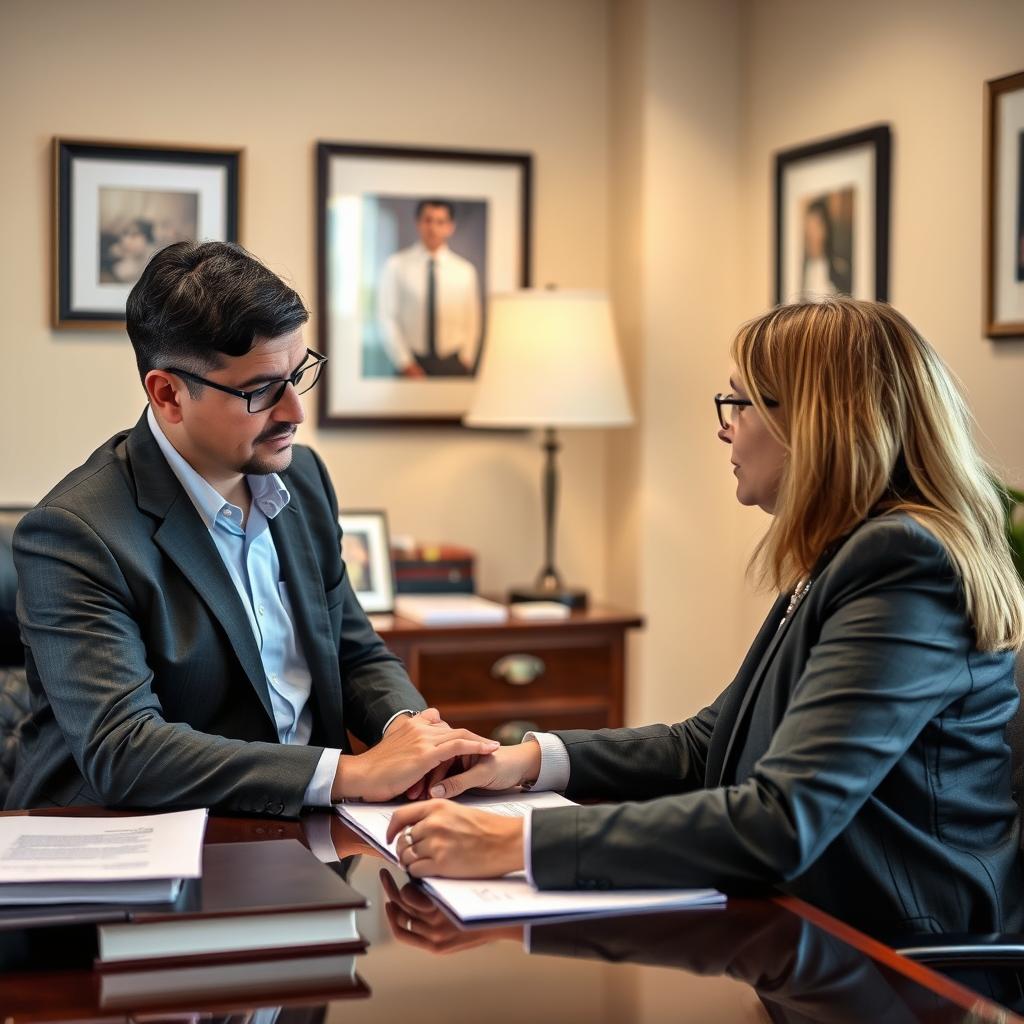
Private Adoption Lawyer Dinwiddie County, VA
Private adoption allows an individual or couple to adopt a child without the involvement of a public child‑welfare agency, navigating instead the direct placement between birth parents and adoptive parents. In Dinwiddie County, Virginia, these proceedings are filed in the Dinwiddie County Circuit Court, which has jurisdiction over all adoption matters. A private adoption lawyer guides the family through the statutory requirements of Va. Code § 63.2‑1200 et seq., from evaluating consent and completing a home study to negotiating the terms of the open‑adoption agreement and finalizing the decree. Whether you are considering a newborn adoption, a stepparent adoption, or a relative adoption, the process calls for careful compliance with Virginia’s procedural rules and attention to the local practices of the Dinwiddie County Circuit Court. Law Offices Of SRIS, P.C. represents families throughout Dinwiddie County in private‑adoption matters. To speak with an attorney, call (888) 437‑7747. Law Offices Of SRIS, P.C. – Advocacy Without Borders.
Understanding Private Adoption in Dinwiddie County
Private adoption in Virginia is not a one‑size‑fits‑all proceeding. The adoptive family, the birth parents, and the child’s circumstances drive the legal steps. In Dinwiddie County, the Circuit Court handles the petition for adoption, the termination of parental rights when necessary, and the entry of the final order of adoption. Because the court sits in the Dinwiddie Courthouse on Courthouse Road, local counsel must be familiar with the judges’ scheduling preferences, the role of the local Department of Social Services in conducting home studies, and the expectations for the finalization hearing. A private adoption frequently begins with an agreement between the biological parents and the adoptive parents, often facilitated by an attorney who ensures the agreement reflects the intent of the parties while remaining consistent with Virginia’s statutory protections for all involved.
The Virginia Code prescribes who may adopt, the consent that must be obtained, when consent may be revoked, and the circumstances under which a parent’s rights may be involuntarily terminated. The adoptive home study is a critical component, and it must be completed by a licensed child‑placing agency or a local department of social services. The study evaluates the prospective adoptive parents’ fitness and the suitability of the home. Once the study is approved, the petition is filed, and after a required waiting period, the court holds a hearing. If the court finds that the adoption is in the child’s best interests, it enters the final order. Because private adoptions involve sensitive family dynamics, experienced counsel can help manage communication between the parties, negotiate post‑adoption contact agreements, and ensure that all filings meet the court’s local requirements.
Frequently Asked Questions
What is the difference between a private adoption and an agency adoption in Virginia?
A private adoption bypasses the foster‑care system and relies on direct placement by the birth parents, while an agency adoption involves a licensed child‑placing agency that has custody of the child. In a private adoption, the birth parents choose the adoptive family and may maintain some degree of contact after the adoption is finalized. Both types are governed by Va. Code § 63.2‑1200 et seq., and both require a home study, consent, and court approval. A private adoption often provides more flexibility and control for the birth parents, but it also demands careful legal oversight to ensure that all statutory requirements are satisfied and that the rights of all parties are protected.
Who must consent to a private adoption in Virginia?
Virginia law requires the consent of the child’s biological mother, any man who is the legal father, and, when applicable, the child if the child is 14 years of age or older. Consent is formalized in a written document that must be acknowledged before a notary public or other authorized officer. The court will examine the voluntariness of the consent during the adoption hearing. If the identity or whereabouts of a biological father are unknown, Virginia law provides procedures for notice by publication. An attorney can assist in navigating the consent‑gathering process to minimize the risk of a later challenge to the adoption.
How does the home‑study process work in Dinwiddie County?
A licensed child‑placing agency or the local department of social services conducts the home study, which evaluates the prospective adoptive parents’ background, financial stability, health, and home environment. The study includes interviews, a review of criminal and child‑protective‑services records, and a physical inspection of the residence. In Dinwiddie County, the home‑study provider must be approved by the Commissioner of the Virginia Department of Social Services. Once the study is completed and approved, it is submitted to the Circuit Court with the petition for adoption. The court will not grant the adoption unless a favorable home study is on file.
Can a birth parent revoke consent after signing it?
Under Virginia law, a consent to adoption becomes irrevocable when the child is placed for adoption and the consent is acknowledged or, if placement does not occur within a reasonable time, after the entry of the final order of adoption. The consent may be revoked before the entry of the final order only upon proof of fraud or duress, or if the court finds that revocation is in the child’s best interests. Because the finality of consent is a highly fact‑sensitive issue, it is essential to obtain guidance from an attorney before the consent is signed so that the adoptive parents understand the timeline and the circumstances that could affect the placement.
What role does the Dinwiddie County Circuit Court play in a private adoption?
The Dinwiddie County Circuit Court has exclusive jurisdiction over all adoption proceedings in the county, including private adoptions. The court reviews the petition, ensures that all required consents and the home study are on file, holds a hearing, and enters the final order of adoption. The judge may ask the adoptive parents and, in some cases, the birth parents to appear. If the adoption is contested—for example, if a biological father opposes the termination of his rights—the court will hear evidence and determine whether adoption is in the child’s best interests. Familiarity with the local courtroom procedures can help the process move smoothly.
Is an attorney required for a private adoption in Virginia?
Virginia law does not mandate that adoptive parents be represented by counsel, but private adoptions involve complex legal requirements, and handling them without an attorney carries substantial risk. An attorney prepares the pleadings, coordinates the home study, secures and verifies consents, addresses any issues with the birth father’s rights, and guides the family through the finalization hearing. Mistakes in the petition or consent process can delay the adoption or, in the worst case, result in the court’s refusal to enter the order. Working with a lawyer who concentrates in family‑law and adoption matters helps protect the interests of both the birth parents and the adoptive family.
How long does a private adoption take in Dinwiddie County?
The timeline for a private adoption varies depending on the circumstances of each case, including the availability of the home‑study provider, the court’s docket, and any contested issues. Once the petition is filed and all required documents are submitted, the court typically schedules a hearing within a timeframe set by its calendar. The statutory waiting periods and the need for a complete home study mean that adoptions rarely proceed on an urgent basis. An experienced attorney can provide a realistic estimate for a particular situation after reviewing the details of the placement.
What is an open adoption, and how is it addressed in Virginia?
An open adoption is an arrangement in which the birth parents and adoptive parents agree to maintain some form of ongoing contact after the adoption is finalized. Virginia recognizes post‑adoption contact agreements, but they must be in writing and approved by the court. The agreement may specify the frequency and type of communication, such as letters, photographs, or visits, and it is enforceable only if it is incorporated into the final order of adoption. Because open‑adoption agreements require careful drafting to balance the interests of all parties, legal guidance is advisable before any commitment is made.
Can a stepparent use a private‑adoption process in Virginia?
Yes, a stepparent may adopt the child of their spouse through a private adoption when the other biological parent’s rights have been terminated or the parent consents. Stepparent adoptions are a common form of private adoption. The petition is filed in the Circuit Court of the county where the child resides or where the petitioner lives, and many of the same requirements—consent, background checks, and a home study—apply, though the home‑study requirement may be waived or modified in certain circumstances. The termination of the non‑custodial parent’s rights can be contested, making legal representation important to protect the stepparent’s and child’s interests.
What happens if the child is born in another state but the adoptive parents live in Dinwiddie County?
An interstate adoption must comply with the Interstate Compact on the Placement of Children (ICPC), a uniform law that governs the placement of a child across state lines for the purpose of adoption. Before the child can leave the sending state, both the sending state and Virginia must approve the placement. The ICPC process adds an extra layer of administrative review and can affect the timing of the adoption. Working with a lawyer experienced in interstate adoptions helps ensure that the compact requirements are satisfied and that the adoption can proceed lawfully in the Dinwiddie County Circuit Court once the child arrives in Virginia.
About Mr. Sris and the Firm’s Of Counsel Attorneys
Mr. Sris, Owner and Founder of Law Offices Of SRIS, P.C., has practiced law since 1997 and is admitted in Virginia, Maryland, the District of Columbia, New Jersey, and New York. He concentrates his practice on family‑law matters, including private adoptions, and appears regularly in the Circuit Courts of Virginia. The firm’s Of Counsel attorneys bring extensive combined legal experience in family law. Together, Mr. Sris and the Of Counsel attorneys work to guide clients through the private‑adoption process with attention to the specific requirements of the Dinwiddie County Circuit Court. Results may vary.
For more information about family‑law representation in other Virginia localities, view our pages for Fairfax County, Prince William County, and Manassas.
Additional resources: Virginia Code Title 63.2 (Adoption) and Dinwiddie County Circuit Court.
Attorney advertising. Prior results do not guarantee a similar outcome. Results may vary.
Case results depend on a variety of factors unique to each case.