
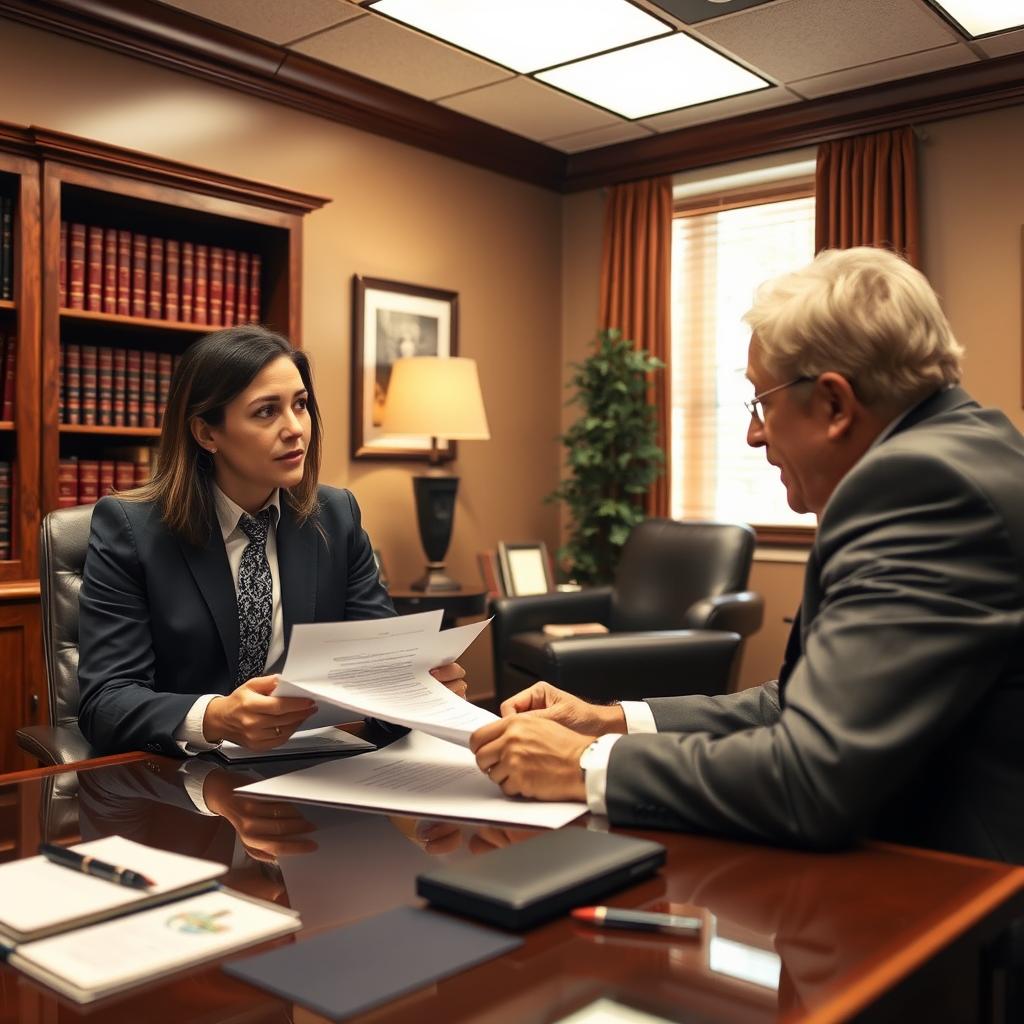
Postnuptial Agreement Lawyer King William County, VA
When married couples in King William County seek to clarify their financial rights and responsibilities without ending the marriage, a postnuptial agreement can provide structure and certainty. Law Offices Of SRIS, P.C. represents clients in drafting, negotiating, and enforcing postnuptial agreements under Virginia law. Mr. Sris, a former prosecutor, and his Of Counsel team bring extensive combined legal experience to these matters, helping spouses in King William, West Point, Aylett, and the surrounding communities protect their interests. Whether you wish to define property division, address spousal support expectations, or resolve existing disagreements about marital finances, a postnuptial agreement must comply with the Virginia Premarital Agreement Act, codified at Va. Code § 20‑147 et seq. For a confidential consultation about your situation, call (888) 437‑7747. Law Offices Of SRIS, P.C. – Advocacy Without Borders.
What Postnuptial Agreements Mean in King William County
King William County, located in Virginia’s Ninth Judicial District, is a rural county bordered by the Mattaponi and Pamunkey Rivers. The county seat is King William, and the incorporated town of West Point serves as a commercial hub. Couples here often own farms, family businesses, timberland, or waterfront real estate, and these assets can be at the center of postnuptial planning. A postnuptial agreement—sometimes called a marital agreement or post‑marital contract—is a voluntary written contract entered into by spouses after marriage that defines how the couple’s property and debts will be allocated if they later separate or divorce. Under Va. Code § 20‑147 et seq., such agreements are governed by many of the same requirements as premarital agreements, including full financial disclosure and the absence of duress. In King William County Circuit Court, located at 351 Courthouse Lane, Suite 201, King William, Virginia, judges consider whether an agreement is fair and was entered into voluntarily when a party later challenges it.
Because King William County is a small community, family law matters often involve neighbors, extended family, and long‑standing local relationships. The court’s approach to enforcing postnuptial agreements emphasizes careful review of each spouse’s understanding of the terms. Couples who negotiate these agreements with the assistance of separate counsel are more likely to have their agreements upheld. Law Offices Of SRIS, P.C. Appears regularly in the King William County Circuit Court and the King William County Juvenile and Domestic Relations District Court, and our attorneys understand the expectations of the local bench and bar. Properly drafted postnuptial agreements can address inheritance rights, business succession, farming operations, and retirement account division, reducing uncertainty for families in the region.
How Mr. Sris and His Of Counsel Handle Postnuptial Agreement Cases
Postnuptial agreement matters in King William County require careful preparation and a clear understanding of Virginia’s equitable distribution framework. Mr. Sris and his Of Counsel approach each case by first learning the couple’s goals, reviewing their financial circumstances, and identifying any potential legal issues. If both spouses are willing to negotiate, we can help them reach mutually acceptable terms through cooperative drafting. If a dispute exists, we represent our client’s interests in negotiations or, if necessary, in court. The key to a valid agreement is full and fair disclosure of assets, liabilities, and income. Without complete financial transparency, a postnuptial agreement may be set aside by the court. Our team works with clients to ensure that all necessary disclosures are made and that the agreement is properly executed before a notary public, as required by Virginia law.
In cases where a spouse challenges an existing postnuptial agreement—often during a subsequent divorce—we examine whether duress, fraud, or unconscionability existed at the time of signing. King William County Circuit Court has exclusive jurisdiction over divorce and equitable distribution matters, and any challenge to a postnuptial agreement is typically heard in that court. Mr. Sris, who has practiced law since 1997, has extensive experience handling complex property divisions involving farms, small businesses, military pensions, and retirement accounts. Our Of Counsel team includes attorneys with backgrounds in business valuation and financial analysis, enabling us to build persuasive arguments for or against enforcement. Throughout the process, we focus on achieving outcomes that our clients can rely on while minimizing the emotional and financial strain of litigation.
About Mr. Sris and His Of Counsel Team
Mr. Sris, Owner and Founder of Law Offices Of SRIS, P.C., has been practicing law since 1997. A former prosecutor, he is admitted in Virginia, Maryland, the District of Columbia, New Jersey, and New York. Mr. Sris testified before the Virginia House Courts of Justice Committee in support of 2019 HB 635 (chief patron Del. David Bulova). His Of Counsel team consists of experienced attorneys who work on postnuptial agreement matters under his guidance. Collectively, they bring extensive combined legal experience to family law cases in King William County. The firm’s Richmond Location at 7400 Beaufont Springs Drive, Suite 300, Room 395, Richmond, VA 23225, serves clients throughout central Virginia, including King William County. Consultation by appointment; call (888) 437‑7747.
Frequently Asked Questions
What is a postnuptial agreement in Virginia?
A postnuptial agreement is a written contract entered into by spouses after marriage that determines how their assets and debts will be divided if they separate or divorce. Under Va. Code § 20‑147 et seq., postnuptial agreements must meet the same standards as premarital agreements: voluntary execution, full financial disclosure, and no unconscionability. Such agreements cannot determine child custody or child support, but they can address property division, spousal support, and inheritance rights. In King William County, these agreements are enforced by the Circuit Court if they are fair and properly executed.
Do I need a lawyer for a postnuptial agreement in King William County?
While Virginia law does not require you to hire an attorney to create a postnuptial agreement, having experienced legal guidance is strongly recommended. An agreement drafted without proper legal advice is more susceptible to a later challenge on grounds of duress, unconscionability, or inadequate disclosure. Mr. Sris and his Of Counsel can ensure that your agreement meets all statutory requirements, protect your interests, and advise you on the specific implications for your financial situation. For a consultation, reach Mr. Sris and his Of Counsel at (888) 437‑7747.
Can a postnuptial agreement be enforced in King William County Circuit Court?
Yes, a postnuptial agreement that meets Virginia’s statutory requirements is generally enforceable in King William County Circuit Court. The court will examine whether both parties entered into the agreement voluntarily, whether there was full financial disclosure, and whether the terms are unconscionable at the time of enforcement. If the agreement is challenged during a divorce proceeding, the court may hold a hearing to determine its validity. Law Offices Of SRIS, P.C. Regularly appears in King William County courts and can help you understand the likely outcome of your situation.
What can a postnuptial agreement cover in Virginia?
A postnuptial agreement can address property division, spousal support, retirement accounts, business interests, and inheritance rights, but cannot determine child custody or child support. In King William County, many couples use postnuptial agreements to clarify the division of farms, timberland, family businesses, and other specialized assets. The agreement may also specify how debts are allocated. Virginia is an equitable distribution state, meaning a court divides marital property fairly but not necessarily equally; a postnuptial agreement can override the default equitable distribution standard, provided it is valid. Speak with an attorney about the specific assets you wish to protect.
How long does it take to get a postnuptial agreement in King William County?
The time required to finalize a postnuptial agreement depends on the complexity of the couple’s finances and the level of cooperation between spouses. If both parties are willing to negotiate and provide complete financial disclosure, an agreement can sometimes be drafted and executed in a matter of weeks. More complex situations—those involving businesses, multiple properties, or contested terms—may take longer. The court is not involved unless a challenge arises later. To discuss your timeline, contact Law Offices Of SRIS, P.C. at (888) 437‑7747.
What happens if a spouse refuses to sign a postnuptial agreement?
Virginia law cannot compel a spouse to sign a postnuptial agreement; the agreement is voluntary. If one spouse is unwilling to negotiate, no agreement can be created. In such cases, the couple may need to address financial disagreements through other means, such as counseling, mediation, or, if the marriage deteriorates, through divorce proceedings where the court will apply equitable distribution. Mr. Sris and his Of Counsel can discuss your options and help you understand the alternatives available under Virginia law. For guidance on your specific situation, reach Law Offices Of SRIS, P.C. at (888) 437‑7747.
Related Practice Areas: For matters involving family law in Fairfax County, Prince William County family law, or family law in Manassas, our attorneys are available to assist.
Virginia Legal Resources: Learn more about postnuptial agreements under the Virginia Code Title 20 (Domestic Relations). The King William County Circuit Court handles enforcement and challenges. For general court information, visit Virginia’s Judicial System website.
Attorney advertising. Prior results do not guarantee a similar outcome. Results may vary.
Case results depend on a variety of factors unique to each case.