
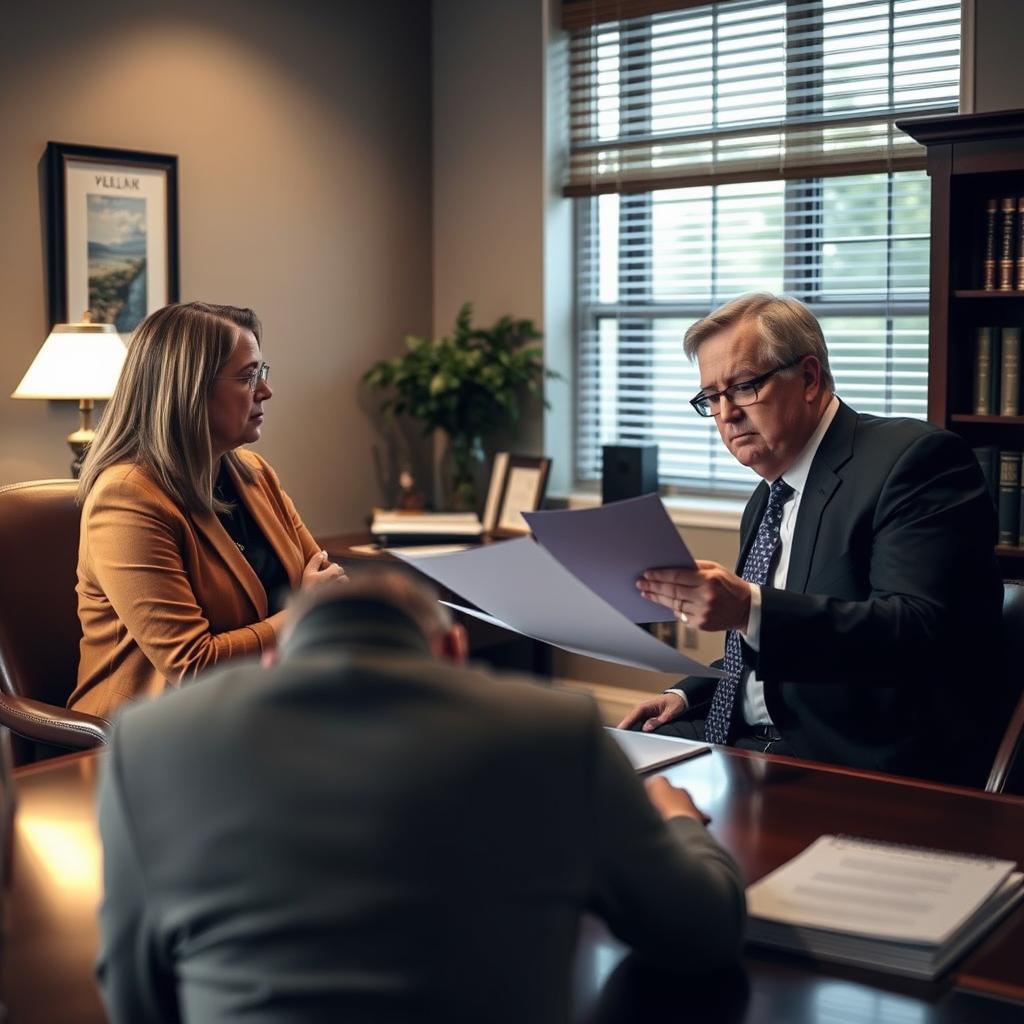
Post Divorce Enforcement Lawyer Fauquier County, VA
When a former spouse fails to honor a divorce decree—whether by skipping alimony payments, withholding child support, or refusing to transfer property according to the court’s order—you need a legal team that understands how to enforce your rights. In Fauquier County, Virginia, family courts provide clear mechanisms to compel compliance, and Mr. Sris of Law Offices Of SRIS, P.C. concentrates his practice on helping individuals secure what the court ordered. From motions for contempt to wage garnishment and Qualified Domestic Relations Orders (QDROs), Mr. Sris and his Of Counsel work to protect your interests and bring non‑compliant parties into line with the decree. Call (888) 437‑7747 to discuss your enforcement options and schedule a consultation. Law Offices Of SRIS, P.C. – Advocacy Without Borders.
What Post‑Divorce Enforcement Looks Like in Fauquier County
In Fauquier County, post‑divorce enforcement is handled by two courts depending on the nature of the obligation. The Fauquier County Circuit Court at 6 Court Street, Warrenton, retains jurisdiction over all divorce‑related matters including equitable distribution, spousal support (alimony), and retirement‑plan division under a QDRO. The Fauquier County Juvenile and Domestic Relations District Court handles stand‑alone custody, visitation, and child support enforcement. For many clients, actions may proceed in both courts simultaneously—for example, enforcing a child support order in the J&DR Court while pursuing contempt for unpaid alimony in the Circuit Court.
Virginia law provides several enforcement tools. The court may issue a show‑cause order directing the non‑compliant spouse to appear and explain why they have not obeyed the decree. If the court finds willful disobedience, it may hold that party in civil contempt and impose sanctions—including incarceration until compliance is achieved. In support‑based matters, the Virginia Division of Child Support Enforcement (DCSE) can intercept tax refunds, suspend driver’s and professional licenses, and report delinquent payors to credit bureaus. For property‑division orders, enforcement often involves seeking a clarifying order from the Circuit Court and, if necessary, a judicial sale or a lien to enforce a monetary award.
Mr. Sris and his Of Counsel team are familiar with the procedural nuances of Fauquier County’s Twentieth Judicial District. Whether the enforcement action involves a single overdue payment or a long‑term pattern of disregard for the decree, they prepare each motion with careful attention to the particular facts and the expectations of the local bench.
How Mr. Sris and His Of Counsel Handle Enforcement Cases
The enforcement process begins with a thorough review of the divorce decree and any subsequent orders. Mr. Sris and his Of Counsel identify the specific provisions being violated, calculate arrears when applicable, and assess the evidence—payment records, correspondence, and court transcripts—to build a clear factual record. The firm then typically sends a demand letter to the opposing party, offering an opportunity to voluntarily comply before court resources are invoked. In many cases, this pre‑filing step resolves the dispute without the expense and delay of litigation.
If informal resolution fails, the team files the appropriate motion in the Fauquier County Circuit Court or J&DR Court. For contempt proceedings, the moving party must prove by clear and convincing evidence that the court’s order was violated and that the violation was willful. Mr. Sris’s experience as a former prosecutor informs his approach to evidentiary presentations, and his Of Counsel attorneys—each with extensive family‑law and trial backgrounds—prepare thoroughly for hearings. Throughout the enforcement process, the firm keeps clients informed about case progress and the realistic options available at each stage, always emphasizing that prior outcomes do not guarantee a similar result; Results may vary. depending on the specific facts of a case.
About Mr. Sris and His Of Counsel Team
Mr. Sris, Owner and Founder of Law Offices Of SRIS, P.C., has practiced law since 1997. As a former prosecutor, he brings a disciplined approach to court‑room advocacy. He personally oversees enforcement matters and works closely with a team of experienced Of Counsel attorneys, engaged through Excella, who have concentrated their own practices on family law and civil litigation. Together, Mr. Sris and his Of Counsel bring extensive combined legal experience to post‑divorce enforcement cases, from straightforward contempt motions to complex interstate enforcement actions.
Mr. Sris testified before the Virginia House Courts of Justice Committee in support of 2019 HB 635 (chief patron Del. David Bulova), which revised aspects of Virginia’s equitable distribution statute. While that testimony was focused on retirement‑account division, it reflects the firm’s deep engagement with Virginia family law. Throughout Fauquier County, Mr. Sris and his Of Counsel have handled enforcement matters for divorced spouses seeking to secure alimony, child support, and property awards. Across all practice areas, the firm has documented case results in Fauquier County with a strong favorable outcome rate; Results may vary. and prior outcomes do not guarantee a similar result
Frequently Asked Questions
What is post‑divorce enforcement in Virginia?
Post‑divorce enforcement is the legal process of compelling a former spouse to comply with the terms of a divorce decree, including alimony, child support, child custody, and property division orders. When a decree is entered by the Fauquier County Circuit Court or the Juvenile and Domestic Relations District Court, both parties are legally bound to its terms. If one party fails to obey—by not paying, not transferring property, or not following custody provisions—the other party can ask the court to enforce the order through motions, contempt proceedings, and support‑related collection tools. Enforcement does not re‑litigate the divorce; it ensures the existing decree is honored.
How can I enforce a divorce decree in Fauquier County?
You may enforce a divorce decree by filing a motion with the appropriate Fauquier County court—usually the Circuit Court for financial and property matters, or the J&DR Court for child‑support and custody issues. Typical steps include sending a demand letter, then filing a petition for rule to show cause or a motion for contempt. The court may then schedule a hearing, issue an order compelling compliance, and impose sanctions such as monetary fines, income withholding, or in extreme cases, incarceration. An experienced enforcement lawyer can identify the most effective procedural route based on the decree’s language and the nature of the violation.
What remedies are available if my ex‑spouse is not paying alimony or child support?
Virginia courts can order income withholding, wage garnishment, interception of tax refunds, suspension of driver’s and professional licenses, and even jail time for willful contempt. For alimony, the Circuit Court may enter a judgment for arrears and allow wage garnishment. For child support, the Division of Child Support Enforcement can pursue administrative remedies independent of court action, including reporting delinquent payors to credit bureaus. An attorney can help you choose the most effective remedy based on the amount owed, the payor’s circumstances, and the likelihood of prompt compliance.
Can a divorce decree be enforced if one party lives in another state?
Yes, under the Uniform Interstate Family Support Act (UIFSA) and other interstate enforcement tools, Virginia courts can enforce support orders against a former spouse who has moved to another state. Property‑division orders and injunctive provisions may require additional procedural steps, such as domesticating the Virginia decree in the state where the non‑compliant party resides. The firm’s multi‑state admissions—Virginia, Maryland, the District of Columbia, New Jersey, and New York—can be valuable when enforcement spans multiple jurisdictions. Mr. Sris and his Of Counsel evaluate the most efficient interstate strategy for each case.
What should I bring to a consultation about post‑divorce enforcement?
Bring a certified copy of your divorce decree and any subsequent modification orders, a detailed record of missed or late payments (including dates and amounts), copies of any correspondence with your ex‑spouse, and any other evidence of non‑compliance such as bank statements or court transcripts. If the enforcement concerns property division, bring deeds, titles, and related documents. If child support is at issue, have the pay‑history statement from DCSE if available. Organizing this information in advance allows Mr. Sris and his Of Counsel to assess your case efficiently and advise you on the trusted path forward.
Do I need a lawyer for post‑divorce enforcement in Fauquier County?
You are not legally required to have an attorney, but enforcement proceedings involve detailed rules of evidence, procedural deadlines, and the need to prove willful contempt by clear and convincing evidence. Without an experienced enforcement lawyer, you risk having your motion denied on technical grounds, delaying the relief you need. Mr. Sris and his Of Counsel are familiar with Fauquier County court procedures and can present your case effectively. For guidance on your specific situation, reach Law Offices Of SRIS, P.C. at (888) 437‑7747.
Also serving nearby counties:
Family Law Lawyer Fairfax County, VA |
Family Law Lawyer Prince William County, VA |
Family Law Lawyer Stafford County, VA
Virginia primary sources:
Virginia Judicial System |
Fauquier County General District Court |
Code of Virginia
Attorney advertising. Prior results do not guarantee a similar outcome. Results may vary.
Case results depend on a variety of factors unique to each case.