
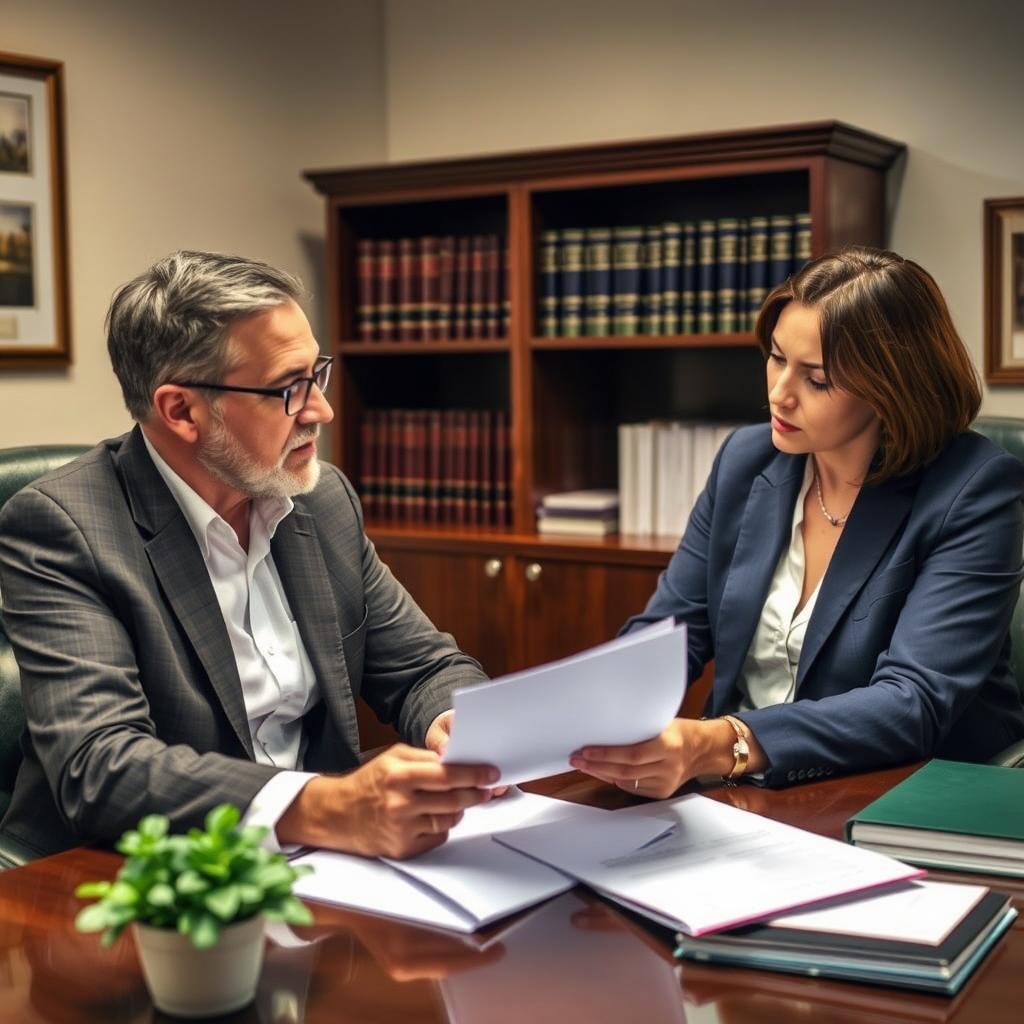
Desertion Divorce Lawyer Prince George County, VA
Your spouse walked out without your consent. You’ve been left to manage alone in Prince George County, and you want to end the marriage. Virginia recognizes desertion as a fault‑based ground for divorce—but proving it means meeting statutory requirements and building the right evidence. Mr. Sris and his Of Counsel team help people in Prince George County navigate desertion divorce cases from the first consultation through the final decree. Desertion under Virginia law requires the willful, continuous abandonment of the marital relationship by one spouse for at least one year, with no justification and without the other’s consent. The divorce is heard exclusively in the Prince George County Circuit Court at 6601 Courts Drive. Because a desertion divorce is a fault ground, there is no mandatory waiting period before filing once the one‑year desertion period is complete. However, the process still requires careful preparation: drafting the complaint, arranging service on the absent spouse, and presenting testimony at a hearing. Mr. Sris and his Of Counsel understand how Virginia courts evaluate desertion claims and can gather the records, communications, and witness statements that make the factual record clear. For a confidential consultation about your situation, reach Law Offices Of SRIS, P.C. at (888) 437-7747. Law Offices Of SRIS, P.C. — Advocacy Without Borders.
What Desertion Divorce Means in Prince George County
Desertion is a fault ground for divorce from the bond of matrimony under Virginia Code § 20‑91. It exists when one spouse voluntarily leaves the marital home, without the other’s consent and without any legal justification, and stays away for a continuous period of at least one year. The departure must be willful, meaning the spouse intended to end the marriage and abandon the relationship—not simply a temporary separation. The one‑year clock runs from the date of abandonment, and if the deserting spouse returns and resumes cohabitation, the period resets. The petitioner (the spouse who was left) must present evidence that the desertion was intentional, continuous, and not due to provocation or a legitimate reason such as military deployment or a protective order. Mr. Sris and his Of Counsel evaluate the specific facts of each case to determine whether the desertion ground is the strongest path forward, or whether a no‑fault ground may be more appropriate.
All divorce suits in Virginia fall under the exclusive original jurisdiction of the circuit court. In Prince George County, that means the Prince George County Circuit Court at 6601 Courts Drive, Prince George, VA 23875, handles every desertion divorce. The clerk’s office processes the filing, and a judge must hear the case even if the absent spouse does not respond. There is no separate family court, but the Circuit Court can also address related matters such as equitable distribution of property, spousal support, and, if there are minor children, custody and child support—though standalone custody and support petitions are filed in the Prince George County Juvenile and Domestic Relations Court. Because a desertion divorce is a fault ground, the court may consider the abandonment when making decisions about property division and support. A corroborating witness is typically required at the final hearing to testify to the desertion facts. Mr. Sris and his Of Counsel handle all stages, from filing the complaint to presenting the evidence at the final hearing.
How Mr. Sris and His Of Counsel Handle Desertion Divorce Cases
Every desertion divorce begins with a confidential consultation. You describe the timeline of the abandonment, what efforts you made to communicate, and what documentary evidence exists—text messages, emails, social media posts, or financial records that show the spouse left and did not return. Mr. Sris and his Of Counsel review the facts under Virginia law to confirm the desertion ground can be established and discuss whether a fault‑based or no‑fault approach better serves your goals. Once the strategy is set, the team drafts the complaint and files it with the Prince George County Circuit Court. Service on the deserting spouse follows—if the spouse’s location is known, a process server or the sheriff can deliver the papers; if the spouse cannot be found, alternative methods may be available through order of the court.
After service, the case proceeds according to the court’s schedule. If the deserting spouse does not contest the divorce, a final hearing is set. At that hearing, you present live testimony, along with any corroborating witnesses, to prove the one‑year desertion. Mr. Sris and his Of Counsel prepare the witnesses and the evidence outline so the factual record meets the statutory requirements. If the spouse does appear and contests the divorce—perhaps by denying willfulness or claiming the departure was justified—the case may involve discovery, negotiations, or a trial. Throughout the process, the team focuses on building a clear, well‑documented record that supports the desertion ground. The firm’s Richmond Location serves clients throughout Prince George County, and Mr. Sris and his Of Counsel appear regularly in Prince George County Circuit Court.
About Mr. Sris and His Of Counsel Team
Mr. Sris, Owner and Founder of Law Offices Of SRIS, P.C., has practiced since 1997. He is a former prosecutor whose trial experience gives him firsthand insight into how evidence is challenged and what judges need to hear. Mr. Sris testified before the Virginia House Courts of Justice Committee in support of 2019 HB 635 (chief patron Del. David Bulova), and he brings that statutory knowledge to every divorce proceeding. Admitted in Virginia, Maryland, the District of Columbia, New Jersey, and New York, Mr. Sris collaborates with a group of Of Counsel attorneys who also contribute decades of litigation and family‑law experience. Together, Mr. Sris and his Of Counsel bring over 120 years of combined legal experience and have achieved 4,739+ documented firm-wide results. Results may vary.
Frequently Asked Questions
What is the ground of desertion for divorce in Virginia?
Desertion is a fault ground that requires willful, continuous abandonment of the marital relationship by one spouse for at least one year without the other’s consent. To prevail, the spouse who was left must show the departure was voluntary, not justified, and that the deserting spouse intended to end the marriage. Evidence may include testimony, communications, and witness accounts. If the deserting spouse returns and resumes cohabitation, the clock resets. Desertion is one of several fault grounds under Virginia Code § 20‑91; others include adultery, cruelty, and felony conviction.
How long must a spouse be gone before I can file for desertion divorce in Prince George County?
The desertion must last at least one full year before you can file a complaint on that ground in Prince George County Circuit Court. The clock begins when the spouse leaves without consent and remains away continuously. Temporary absences for work or short separations do not count. If you are unsure whether the time requirement has been met, a consultation with an attorney can help you evaluate the timeline and decide whether to rely on desertion or a no‑fault ground.
Do I need a lawyer to file for divorce on the ground of desertion in Prince George County?
You are not legally required to hire a lawyer, but proving desertion often requires careful evidence gathering and courtroom presentation that an experienced attorney is prepared to provide. A lawyer can help draft the complaint, arrange service on the absent spouse, prepare corroborating witnesses, and present the facts in a way that meets the court’s requirements. Mr. Sris and his Of Counsel handle desertion divorces in Prince George County and can assess whether a fault‑based approach or a no‑fault alternative works best for your situation.
What evidence do I need to prove desertion?
Common evidence includes your own testimony, testimony from people who witnessed the abandonment, correspondence such as emails or text messages, and any other documentation that demonstrates the spouse left voluntarily and stayed away. Financial records showing a separate residence or a lack of joint expenses can also help. An attorney will review what you have and identify any gaps before filing. Because every case is different, the necessary proof depends on whether the desertion is likely to be contested.
What happens after I file the divorce complaint in Prince George County Circuit Court?
After the complaint is filed, it must be served on the deserting spouse; the case then proceeds to a final hearing or, if contested, to litigation. If the spouse does not respond, the court will typically schedule an uncontested hearing. You and a corroborating witness testify, and if the judge finds the desertion ground proved, the divorce is granted. Contested cases may involve discovery, pretrial motions, and a full trial. Mr. Sris and his Of Counsel manage the entire court process, from filing through decree.
Can I get spousal support or property division in a desertion divorce in Virginia?
Yes, the Prince George County Circuit Court can address equitable distribution, spousal support, and child custody in the same divorce suit. Virginia is an equitable distribution state; the court divides marital property fairly, though not necessarily equally, considering the factors in Virginia Code § 20‑107.3. The fault ground of desertion may influence the court’s decision on spousal support and property division, so it is important to discuss your priorities early in the case.
Family Law Lawyer Fairfax County, VA ·
Family Law Lawyer Prince William County, VA ·
Family Law Lawyer Manassas, VA
Primary authority references:
Virginia Code Title 20 (Domestic Relations) ·
Prince George County Circuit Court
Attorney advertising. Prior results do not guarantee a similar outcome.
Case results depend on a variety of factors unique to each case.