
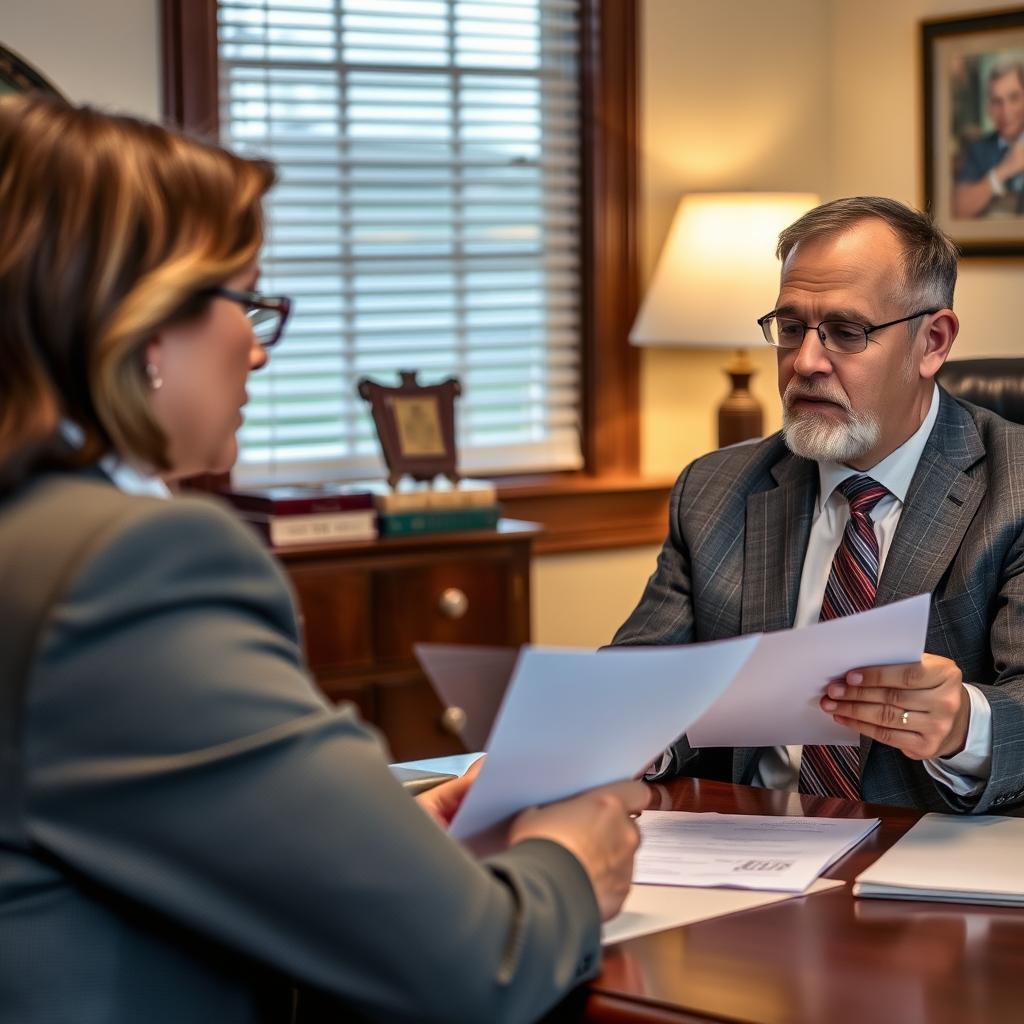
Contempt Lawyer Rappahannock County, VA
When a family court enters an order—whether it sets child support, allocates custody, or divides marital property under an equitable distribution decree—compliance is not optional. In Rappahannock County, Virginia, a party who fails to follow a court order may face contempt proceedings before the same judicial officer who issued the directive. The Rappahannock County Circuit Court handles contempt arising from divorce decrees, spousal support awards, and property division, while the Rappahannock County Juvenile and Domestic Relations District Court addresses contempt matters tied to custody, visitation, and child support. Each court applies Virginia’s contempt statutes, including Va. Code § 18.2‑456, and the underlying domestic relations provisions of Title 20. Mr. Sris, the firm’s Owner and Founder, has practiced in Virginia since 1997 and appears regularly before the Rappahannock County courts. Law Offices Of SRIS, P.C. Concentrates on family law contempt matters in this rural, Twentieth Judicial District locality. To discuss enforcement or defense of a court order in Rappahannock County, reach the firm at (888) 437‑7747. Law Offices Of SRIS, P.C. – Advocacy Without Borders.
What Contempt Means in Rappahannock County, Virginia
Contempt in family law is a court’s mechanism to enforce its own orders. In Rappahannock County, the proceeding is not a new lawsuit; it grows out of the existing domestic relations case. If a party violates a divorce decree, spousal support obligation, equitable distribution judgment, custody determination, or child support order, the aggrieved party may petition the issuing court for a rule to show cause. The responding party must then explain why the court should not hold them in contempt. The same court—either the Circuit Court or the Juvenile and Domestic Relations District Court—hears the contempt matter, applying Virginia substantive law and local procedural rules. Judges in the Twentieth Judicial District, which includes Rappahannock, Fauquier, and Loudoun Counties, are familiar with the challenges that arise in rural and semi‑rural family law cases. The Rappahannock County Circuit Court sits at 250 Gay Street in Washington, Virginia, and the J&DR Court shares the same judicial center. Because both courts operate under the same roof, counsel must be prepared to navigate proceedings efficiently, often on the court’s busy docket.
Virginia law distinguishes between civil and criminal contempt. Civil contempt is remedial—it seeks to compel compliance with the order for the benefit of the opposing party. A court may impose fines that are conditional (purgeable) or order incarceration until the contemnor complies. Criminal contempt punishes conduct that offends the court’s dignity, and sanctions include fixed jail sentences or fines. In family law, most contempt initiations begin as civil proceedings, though repeated or willful violations may be treated as criminal. The statutes that govern these proceedings, including Va. Code § 20‑115 (enforcement of support orders) and § 18.2‑456 (contempt generally), provide the framework, but the specific approach varies with the facts of each case. Mr. Sris and his Of Counsel focus on presenting the factual record clearly so the court can determine whether a violation was willful and, if so, fashion an appropriate remedy.
How Mr. Sris and His Of Counsel Handle Contempt Cases
Mr. Sris and his Of Counsel approach Rappahannock County contempt proceedings by first confirming the enforceability of the underlying order. Not every directive is suitable for a contempt action; the order must be clear, definite, and capable of enforcement. For example, a vague parenting‑time provision may not support a show‑cause rule, while a specific child‑support amount payable on a date certain almost always does. The firm’s attorneys review the order’s language, the alleged violation, and the evidence that will be presented to the court. They also examine whether alternative remedies—such as a motion to modify the obligation—might resolve the problem more efficiently than litigation.
On the initiating side, the firm prepares and files the necessary pleadings in the appropriate court, arranges for service on the respondent, and seeks a hearing date. In Rappahannock County, the court’s calendar determines when a show‑cause hearing will be heard. The firm’s attorneys present testimony, financial records, communication logs, and other evidence to document the violation. When defending a contempt charge, counsel may challenge the sufficiency of the notice, the clarity of the order, or the willfulness of the alleged violation, and may present evidence of inability to comply. In either posture, Mr. Sris and his Of Counsel advocate for a fair hearing and work toward a resolution that respects both the court’s authority and the client’s rights. While the outcome in a contested contempt matter cannot be past results do not guarantee a similar outcome, the firm’s methodical preparation and familiarity with Rappahannock County courts aim to secure the favorable outcomes.
About Mr. Sris and the Firm’s Of Counsel Attorneys
Mr. Sris, Owner and Founder of Law Offices Of SRIS, P.C., has been practicing law since 1997. A former prosecutor, he brings trial experience in criminal and civil matters. He is admitted in Virginia, Maryland, the District of Columbia, New Jersey, and New York. Mr. Sris testified before the Virginia House Courts of Justice Committee in support of 2019 HB 635 (chief patron Del. David Bulova). The firm’s Of Counsel attorneys include practitioners with backgrounds in prosecution, law enforcement, and complex litigation. Together, they represent clients in Rappahannock County and throughout Virginia. The firm handles contempt matters arising from family law orders, drawing on extensive combined legal experience between Mr. Sris and his Of Counsel. Results may vary.
Frequently Asked Questions
What is family law contempt in Virginia?
Family law contempt occurs when a party willfully disobeys a court order issued in a domestic relations case, including divorce decrees, custody arrangements, or support obligations. Virginia law allows the issuing court to enforce the order through civil remedial measures—such as purgeable fines or conditional incarceration—or, in severe cases, criminal sanctions. The proceeding is heard by the same court that entered the original order, applying the relevant statutes in Title 20 and Va. Code § 18.2‑456. The key issue is whether the violation was intentional. Proof of inability to comply may be a defense in civil contempt. For a consultation about your contempt matter, reach Law Offices Of SRIS, P.C. at (888) 437‑7747.
How does someone initiate a contempt proceeding in Rappahannock County?
The aggrieved party files a petition or motion for a rule to show cause in the court that issued the original order—either the Rappahannock County Circuit Court or the Juvenile and Domestic Relations District Court. The motion must identify the order, the specific provision violated, and the facts showing the violation. The court issues a show‑cause rule setting a hearing date. Notice is served on the alleged violator. At the hearing, both sides present evidence. The court determines whether contempt occurred and, if so, what remedy is appropriate. The firm can prepare and file the necessary pleadings and represent clients at the hearing. To discuss initiating or responding to a contempt charge, contact Law Offices Of SRIS, P.C. at (888) 437‑7747.
What consequences can a contempt finding bring in Virginia?
A Virginia court may impose sanctions including conditional fines, attorney’s fees, and jail time, depending on whether the contempt is civil or criminal. In a civil contempt proceeding, the sanction is designed to compel compliance; the contemnor may be jailed until they obey the order—a so‑called coercive or purgeable incarceration. Criminal contempt may result in a fixed jail sentence or a fine, imposed to vindicate the court’s authority. The specific outcome depends on the nature of the violation, the contemnor’s ability to comply, and the court’s assessment of best‑interests factors under the applicable statute. Because contempt can affect liberty and property interests, retaining experienced counsel is important. Law Offices Of SRIS, P.C. represents clients through every stage of contempt litigation.
Can a lawyer help if I am accused of contempt in Rappahannock County?
Yes. An attorney can challenge the alleged violation, present evidence of compliance or inability to comply, and argue for mitigation of any sanction. In Rappahannock County, the court expects that each side will present a clear, organized case. Defense counsel may raise procedural defects—such as insufficient notice—or contest the willfulness element. Where a client has partially complied or has a valid reason for non‑compliance, the firm identifies those facts and brings them to the court’s attention. Early engagement with counsel can also facilitate negotiations with the opposing party to resolve the matter without a contested hearing. To discuss defense against a contempt accusation, contact Mr. Sris and his Of Counsel at (888) 437‑7747.
What should I do to enforce a child‑support order in Rappahannock County?
If the other parent is not paying child support as ordered, you may file a petition for a rule to show cause in the Rappahannock County Juvenile and Domestic Relations District Court. The petition must identify the support order and the arrearage. The court will set a hearing date and require the obligor to appear. At the hearing, the court may determine the amount of past‑due support and direct payment, impose interest, and, if the violation is willful, find the obligor in contempt. The firm can prepare the petition, calculate the arrearage, and represent you at the hearing. In some cases, the Division of Child Support Enforcement may also be involved. For guidance on enforcing a support order, reach Law Offices Of SRIS, P.C. at (888) 437‑7747.
How does a custody‑contempt case differ from a support‑contempt case?
Custody‑contempt cases focus on violations of a parenting plan—such as denial of visitation—while support‑contempt cases address unpaid financial obligations. Both types are enforceable through the Rappahannock County Juvenile and Domestic Relations District Court if the order was entered there, or through the Circuit Court if part of a divorce decree. The remedies differ: in support‑contempt cases, the court often orders payment of arrears plus interest and may impose incarceration; in custody‑contempt cases, the court may fashion make‑up parenting time or modify the custody arrangement. Because the procedures and evidentiary requirements vary, the firm’s attorneys tailor their approach based on whether the violation is financial or conduct‑based. To discuss your specific contempt situation, contact Law Offices Of SRIS, P.C. at (888) 437‑7747.
Related family law pages:
Fairfax County Family Law Lawyer |
Fairfax Family Law Lawyer |
Falls Church Family Law Lawyer |
Prince William County Family Law Lawyer |
Manassas Family Law Lawyer
Primary source references:
Va. Code § 18.2‑456 – Contempt |
Va. Code § 20‑115 – Enforcement of support orders |
Rappahannock County Circuit Court
Attorney advertising. Prior results do not guarantee a similar outcome. Results may vary.
Case results depend on a variety of factors unique to each case.