
Catholic Annulment Lawyer Roanoke County, VA
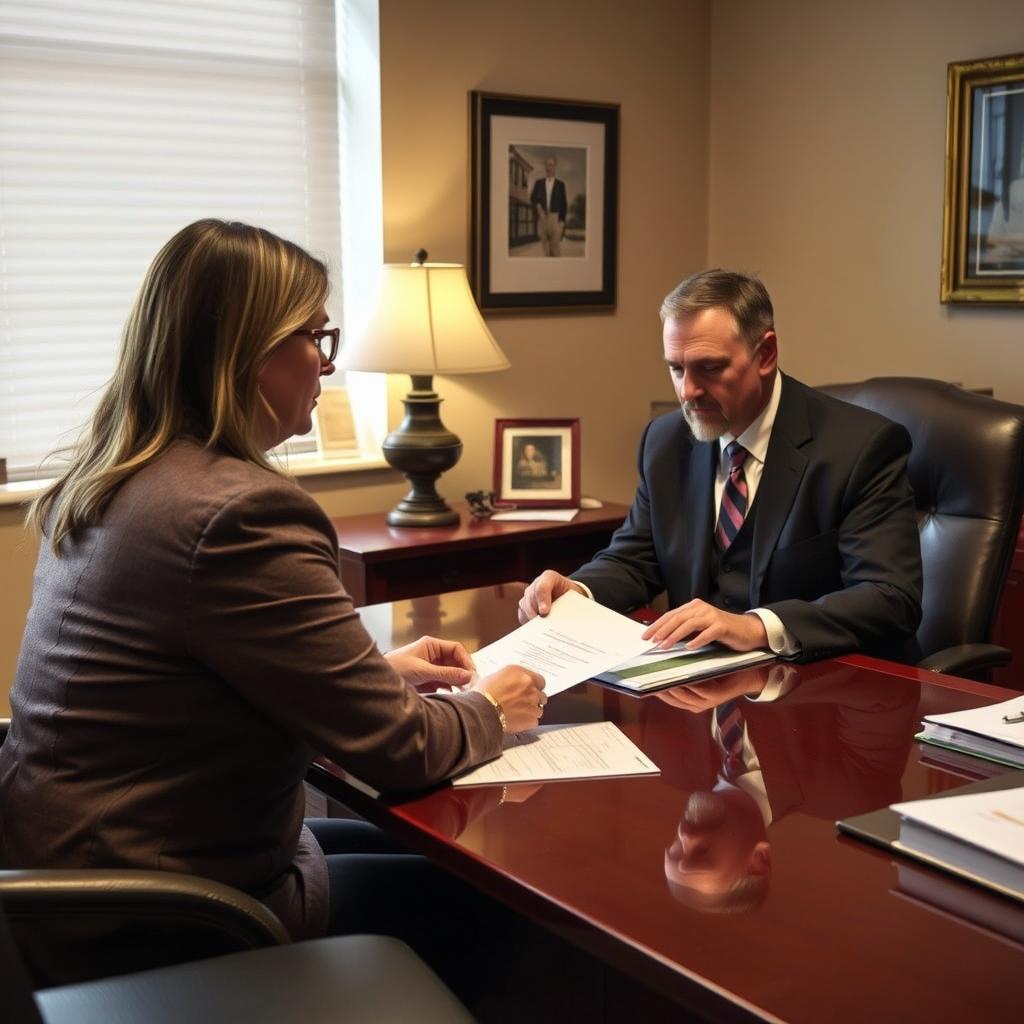
You married in the Catholic Church, surrounded by family and your faith community. Now you have discovered that the marriage may have been invalid from the beginning—perhaps your spouse concealed a prior marriage, or a defect in the ceremony now calls the sacrament into question. You want to move forward, but first you need clarity about your legal standing in Virginia. In Roanoke County, Catholic annulment is not only a religious process; it may also intersect with a civil annulment action under Virginia law. The two are distinct, and navigating both requires an approach grounded in family law and an understanding of the Catholic faith. Mr. Sris and the firm’s Of Counsel attorneys represent clients in Roanoke County who are evaluating whether their marriage meets the statutory grounds for civil annulment. Reach Law Offices Of SRIS, P.C. at (888) 437‑7747 to request a consultation about your specific circumstances. Law Offices Of SRIS, P.C. – Advocacy Without Borders.
What Catholic Annulment Means in Roanoke County
A Catholic annulment—formally a declaration of nullity—is a determination by a Church tribunal that a sacramental marriage was invalid from the start because of an impediment such as lack of canonical form, prior bond, or a defect of consent. That ecclesiastical proceeding is separate from any civil annulment action in the Virginia courts. In Roanoke County, a civil annulment is a lawsuit filed in the Roanoke County Circuit Court at 305 East Main Street, Salem, VA 24153. Under Virginia law, an annulment declares that the marriage is void or voidable from inception, rather than dissolving it as a divorce does. The distinction carries significant legal consequences for property division, spousal support, and even the legitimacy of children born during the marriage.
Roanoke County is part of the Twenty‑third Judicial District, and the Circuit Court has exclusive original jurisdiction over all suits for annulment. The court applies the statutory grounds found in Va. Code § 20‑89.1 and related sections of Title 20. When a Catholic annulment has already been granted by the Church, that decree does not automatically void the civil marriage. A separate civil proceeding is typically necessary to resolve the legal status of the parties. Mr. Sris and the firm’s Of Counsel attorneys understand both the religious and civil dimensions of annulment and can advise clients on whether a civil action is appropriate and what effects it may have on property, custody, and support obligations.
Understanding Civil Annulment Grounds in Virginia
Virginia law permits a civil annulment in specific circumstances enumerated by statute. The grounds are narrower than those recognized by a Catholic tribunal. Under Va. Code § 20‑89.1, a marriage may be declared void or voidable if, for example, one party lacked capacity to consent because of mental incapacity, intoxication, or fraud; if the marriage was procured by duress or force; if either party was previously married and the prior marriage had not been dissolved; or if the parties are within prohibited degrees of relationship. The statute also addresses bigamous marriages, underage marriages without proper consent, and marriages where one spouse was incurably impotent at the time of the marriage. Each ground has its own evidentiary requirements and procedural posture. A Roanoke County Circuit Court judge will evaluate the evidence and determine whether the marriage should be annulled.
Because grounds for civil annulment are limited, not every Catholic annulment is accompanied by a corresponding civil action. In many cases, a divorce is the more appropriate civil remedy—even when the Church has declared the marriage null. Mr. Sris and the firm’s Of Counsel attorneys help Roanoke County clients distinguish between civil annulment, divorce, and legal separation and choose the path that best aligns with their spiritual and practical objectives. Throughout the process, the complexities of equitable distribution, spousal support, and child‑related matters are addressed with attention to the unique character of annulment proceedings.
How Mr. Sris and the Firm’s Of Counsel Attorneys Handle Annulment Matters
When a client comes to the firm with a potential annulment matter, the first step is a thorough review of the factual and legal landscape. The firm’s Of Counsel attorneys, working alongside Mr. Sris, gather marriage records, Church documents where relevant, and any other evidence bearing on the statutory grounds. They evaluate whether the facts fit within one of Virginia’s annulment categories and whether filing a complaint for annulment is procedurally sound. Because annulment actions are equitable in nature, the court considers the totality of the circumstances; an experienced attorney can help present the case in a way that highlights the applicable statutory factors.
The proceeding itself follows the same general timeline as other family law matters in Roanoke County Circuit Court, though the evidentiary focus differs. A complaint must be filed and served on the other spouse, who has an opportunity to respond. If the opposing party contests the annulment, the court may hold evidentiary hearings. If both parties agree that grounds exist and can present corroborating evidence, the matter can often proceed without a contested trial. Throughout, Mr. Sris and the firm’s Of Counsel attorneys work to keep the client informed about the process and to pursue a resolution that respects the client’s religious convictions while protecting their legal interests.
About Mr. Sris and the Firm’s Of Counsel Attorneys
Mr. Sris, Owner and Founder of Law Offices Of SRIS, P.C., has practiced family law since the firm was established in 1997. His experience encompasses the full range of domestic relations matters in Virginia, including annulments, divorces, custody disputes, and equitable distribution cases. Mr. Sris has appeared before circuit courts across the Commonwealth, including the Roanoke County Circuit Court, and he is admitted to practice in Virginia, Maryland, the District of Columbia, New Jersey, and New York. His background as a former prosecutor brings a detail‑oriented perspective to family law cases where statutory interpretation and evidentiary standards are central.
The firm’s Of Counsel attorneys contribute extensive combined legal experience in family law. They work with Mr. Sris on annulment matters, evaluating the facts, preparing pleadings, and advocating in court when necessary. The firm’s Shenandoah Location serves Roanoke County clients, with the ability to meet by appointment at the Woodstock address or to arrange consultations by phone. For an annulment action, having counsel who understands both the legal framework and the religious context can make a meaningful difference in how the matter proceeds. For a consultation about your annulment options in Roanoke County, reach the firm at (888) 437‑7747.
Frequently Asked Questions
Do I need a civil annulment if the Catholic Church already granted an annulment?
A Catholic annulment does not automatically dissolve the civil marriage in Virginia. You must file a separate civil action—either an annulment or a divorce—in the Roanoke County Circuit Court. Which remedy is appropriate depends on whether your situation meets the statutory grounds for annulment under Va. Code § 20‑89.1. If it does not, a no‑fault divorce based on separation may be the preferred path. An attorney can help you evaluate the options. For guidance on your specific situation, reach Law Offices Of SRIS, P.C. at (888) 437‑7747.
What grounds for annulment are recognized in Virginia?
Virginia law recognizes annulment when a marriage is void or voidable due to specific impediments. These include an undissolved prior marriage, consanguinity, mental incapacity, fraud, duress, underage status without proper consent, incurable impotence at the time of marriage, or a spouse’s conviction of a felony before marriage. Not every defect that would support a Catholic annulment qualifies for a civil annulment. The Roanoke County Circuit Court evaluates each case based on evidence presented. An experienced family law attorney can assess whether your circumstances fit within the statutory grounds.
How long does an annulment proceeding take in Roanoke County?
The timeframe for an annulment action varies depending on whether the matter is contested and on the court’s calendar. If both parties agree on the facts and grounds and can present corroborating evidence without objection, the proceeding can be resolved relatively quickly. A contested annulment, where the other spouse disputes the existence of grounds, may involve discovery and evidentiary hearings and will take longer. The Roanoke County Circuit Court schedules matters according to its docket; no fixed timeline can be promised. Mr. Sris and the firm’s Of Counsel attorneys keep clients informed as the case moves forward.
How does an annulment differ from a divorce in Virginia?
A divorce ends a valid marriage, while an annulment declares the marriage invalid from the start. Under Virginia law, an annulment may affect property division differently because marital property is typically defined as assets acquired during a valid marriage. An annulment can also impact spousal support and the legitimacy of children born during the union, although children of a voidable marriage are generally treated as legitimate. A divorce, by contrast, proceeds on established statutory grounds such as separation or fault and applies equitable distribution rules under Va. Code § 20‑107.3. The choice between annulment and divorce requires careful legal analysis.
Can I get an annulment if my spouse hid a prior marriage from me?
Yes, if your spouse was already married when you entered into the marriage, that prior undissolved union is a recognized ground for annulment under Virginia law. Such a marriage is void ab initio. You will need to provide evidence that the prior marriage existed and was not dissolved before your ceremony. Church records, civil marriage certificates, and divorce decrees from other jurisdictions may be relevant. The Roanoke County Circuit Court can enter a decree of annulment based on the evidence presented. Consult an attorney to determine the documentation needed in your particular case.
What if my spouse does not agree to an annulment?
A spouse cannot block an annulment simply by withholding consent if the statutory grounds are met. The court decides based on evidence, not consent. However, if the opposing spouse contests the factual basis for annulment, the proceeding becomes contested, and the court may require a hearing. Both sides will present evidence and arguments. Working with an attorney experienced in contested annulment matters is essential to protect your interests. Mr. Sris and the firm’s Of Counsel attorneys represent clients in contested and uncontested annulment actions in Roanoke County.
Will an annulment affect custody or visitation in Roanoke County?
Child custody and visitation are determined separately from the validity of the marriage. Even if a marriage is annulled, the Roanoke County Juvenile and Domestic Relations District Court or the Circuit Court, depending on context, will decide custody, visitation, and child support based on the best interests of the child under Va. Code § 20‑124.3. The child’s legitimacy is protected by statute, and a parent’s rights and obligations are not extinguished by an annulment. An attorney can address custody and support issues as part of the overall family law proceeding.
How do I start the annulment process in Roanoke County?
Begin by scheduling a consultation with a family law attorney to evaluate whether statutory grounds exist. The attorney will review your marriage records, Church documents (if a Catholic annulment is also pending), and any other relevant information. If annulment is appropriate, a complaint is drafted and filed with the Roanoke County Circuit Court at 305 East Main Street, Salem, VA. Service on the other spouse must satisfy Virginia’s procedural requirements. From there, the case proceeds according to court scheduling. For a consultation, reach Mr. Sris and the firm’s Of Counsel attorneys at (888) 437‑7747.
Related Practice Areas:
Fairfax County Family Law |
Prince William County Family Law |
Fairfax City Family Law |
Falls Church Family Law |
Manassas Family Law
Authority Sources:
Virginia Code Title 20 |
Virginia Judicial System
Attorney advertising. Prior results do not guarantee a similar outcome.
Case results depend on a variety of factors unique to each case.