
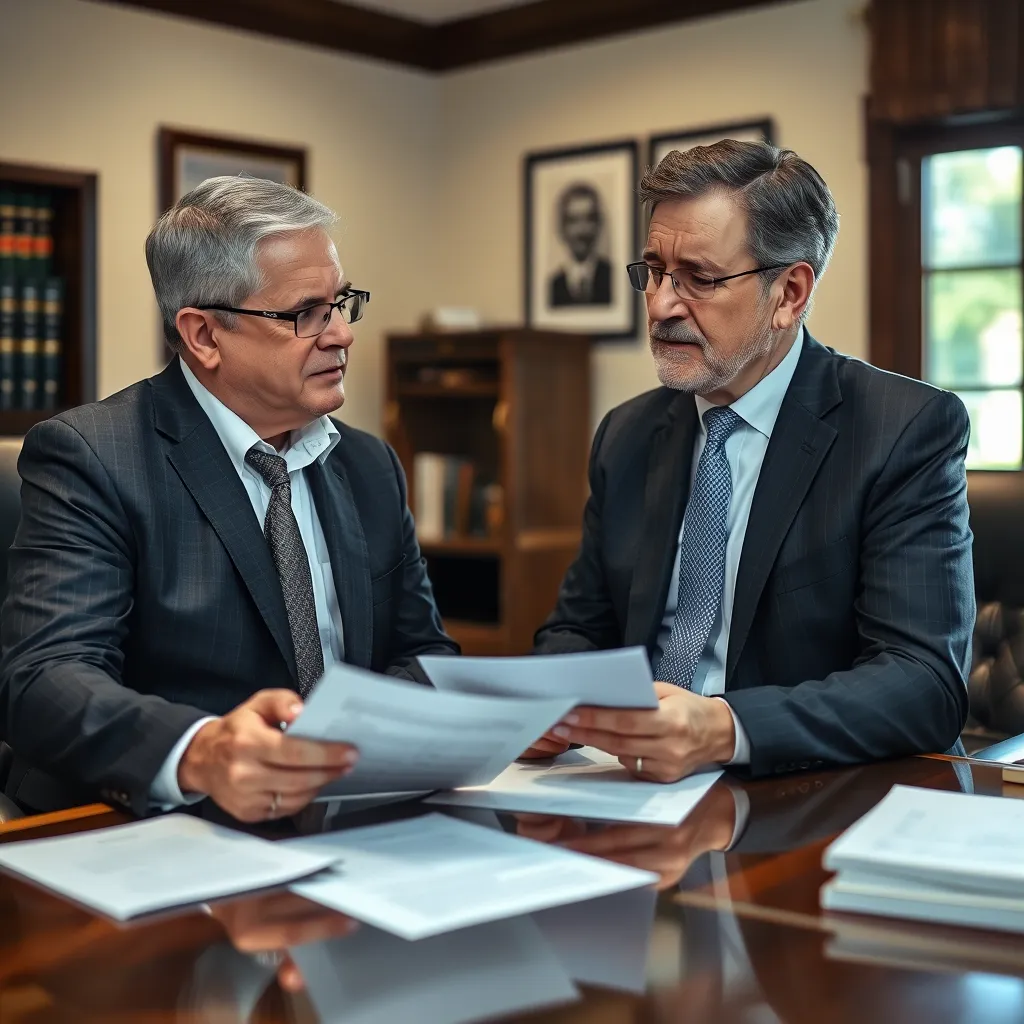
Marital Settlement Agreement Lawyer Manassas, VA
A marital settlement agreement—often called a separation agreement—resolves key issues like property division, spousal support, and debt allocation when a marriage ends. In Manassas, Virginia, these agreements are governed by Va. Code § 20‑109 and must be carefully structured to hold up in the Manassas Circuit Court, which serves Manassas City, Manassas Park, and Prince William County. Because Virginia follows equitable distribution under Va. Code § 20‑107.3, a well‑drafted agreement can provide certainty about how assets and liabilities will be handled, helping both parties avoid prolonged litigation. Law Offices Of SRIS, P.C. assists clients throughout the Manassas area with the negotiation, drafting, and enforcement of marital settlement agreements. For a consultation, call (888) 437‑7747. Law Offices Of SRIS, P.C. – Advocacy Without Borders.
What Marital Settlement Agreements Mean in Manassas
In Manassas, marital settlement agreements are formal contracts that settle the financial and personal rights of a divorcing couple. The Manassas Circuit Court, located at 9311 Lee Avenue, Suite 230, hears divorce and equitable distribution cases; the Manassas Juvenile & Domestic Relations District Court handles child‑related matters such as custody and support. A marital settlement agreement can address all of these issues at once, making it a cornerstone of an uncontested divorce.
Virginia law permits spouses to resolve their differences by written agreement, and when the agreement is properly executed and incorporated into a final divorce decree, it becomes enforceable as a court order. The process involves full financial disclosure, negotiation of terms, and careful drafting to ensure that the agreement complies with statutory requirements. Because Manassas courts expect agreements to be fair and voluntarily entered into, working with an experienced family law practitioner can make a significant difference in the outcome. The firm’s familiarity with local court practices in the Thirty‑first Judicial District helps clients navigate these proceedings with a clear understanding of what to expect.
How Mr. Sris and the Firm’s Of Counsel Attorneys Handle Marital Settlement Agreements
Mr. Sris, Owner and Founder of Law Offices Of SRIS, P.C., and the firm’s Of Counsel attorneys approach each marital settlement agreement with a focus on client goals and long‑term stability. The process typically begins with a thorough review of the marital estate—real property, retirement accounts, business interests, and debts—so that both parties can make informed decisions. The team then negotiates terms that address property distribution, spousal support, and any child‑related provisions, always mindful of Virginia’s equitable distribution factors.
When both sides are cooperative, the firm drafts a written agreement that can be submitted to the Manassas Circuit Court as part of an uncontested divorce. If disputes arise, the attorneys are prepared to litigate specific issues while still working toward a resolution that minimizes court time. In every case, the goal is a clear, enforceable document that stands up in Virginia courts. Throughout the process, the firm keeps clients informed and involved, drawing on decades of collective legal experience to protect their interests.
About Mr. Sris and the Firm’s Of Counsel Attorneys
Mr. Sris founded Law Offices Of SRIS, P.C. in 1997 and serves as its Owner and Founder. A former prosecutor, he understands how to evaluate legal positions and build effective strategies. His legislative work includes testifying before the Virginia House Courts of Justice Committee in support of 2019 HB 635 (chief patron Del. David Bulova). Mr. Sris is admitted to practice in Virginia, Maryland, the District of Columbia, New Jersey, and New York.
The firm’s Of Counsel attorneys add further depth to its family law practice. Together, Mr. Sris and the of‑counsel team bring extensive experience to matters involving marital settlement agreements, divorces, and other domestic relations issues. When you work with Law Offices Of SRIS, P.C., you receive guidance from a dedicated group of practitioners who focus on achieving practical, durable solutions. Results may vary.
Frequently Asked Questions
What is a marital settlement agreement in Virginia?
A marital settlement agreement is a written contract between spouses that resolves all issues related to their divorce, including property division, spousal support, and, if applicable, child custody and support. Under Va. Code § 20‑109, such agreements may be affirmed by the court and incorporated into the final divorce decree. Once incorporated, the agreement has the force of a court order and can be enforced through contempt proceedings if a party fails to comply.
Do I need a lawyer to draft a marital settlement agreement in Manassas?
Virginia law does not require a lawyer to draft a marital settlement agreement, but legal guidance is strongly recommended to ensure that the document is fair, complete, and enforceable. Agreements that omit required language, misclassify property, or fail to address tax consequences can be challenged later. An experienced family law attorney can identify potential pitfalls and help both parties enter into an agreement that will withstand scrutiny in the Manassas Circuit Court.
What can a marital settlement agreement cover?
A marital settlement agreement can cover practically all aspects of a divorce, including division of real estate, personal property, bank accounts, retirement benefits, and debts; spousal support; and, when children are involved, custody, visitation, and child support. Virginia law allows spouses to customize their agreement as long as the terms are not unconscionable and are entered into voluntarily. The agreement cannot, however, bind the court on child‑related issues if the terms are not in the child’s best interests.
Can a marital settlement agreement be modified after a divorce in Virginia?
Some provisions of a marital settlement agreement may be modified after divorce, while others may not, depending on their nature and the language of the agreement. Typically, property divisions are final and cannot be reopened. Spousal support provisions may be modifiable if the agreement expressly allows for modification or if a material change in circumstances occurs. Child custody and support provisions are always modifiable based on the best interests of the child. A careful review of the agreement is necessary to determine what changes are possible.
How is a marital settlement agreement enforced in Manassas?
A marital settlement agreement incorporated into a divorce decree is enforced through the Manassas Circuit Court’s contempt powers. If one party fails to comply—for example, by not transferring property or paying support—the other party can file a rule to show cause. The court may impose sanctions, award attorney fees, and take other steps to compel compliance. Because enforcement proceedings can be time‑consuming, it is important to draft the agreement with clear, specific obligations from the outset.
What if my spouse refuses to sign a marital settlement agreement?
If a spouse refuses to sign a marital settlement agreement, the divorce will proceed as a contested matter, and the court will decide the unresolved issues after a trial. In Manassas, this means scheduling a hearing before the Circuit Court, where each side presents evidence and witnesses. Even when negotiations stall, temporary agreements on certain issues can sometimes be reached through pendente lite motions. An attorney can help explore every avenue for resolution while preparing for litigation if necessary.
For guidance on your specific situation, reach Law Offices Of SRIS, P.C. at (888) 437‑7747.
Related family law services:
Prince William County family law lawyer |
Fairfax County family law lawyer |
Manassas Park family law lawyer |
Falls Church family law lawyer
Primary sources:
Virginia Code Title 20 (Domestic Relations) |
Virginia Judicial System |
Prince William Circuit Court
Attorney advertising. Prior results do not guarantee a similar outcome.
Results may vary.
Case results depend on a variety of factors unique to each case.