
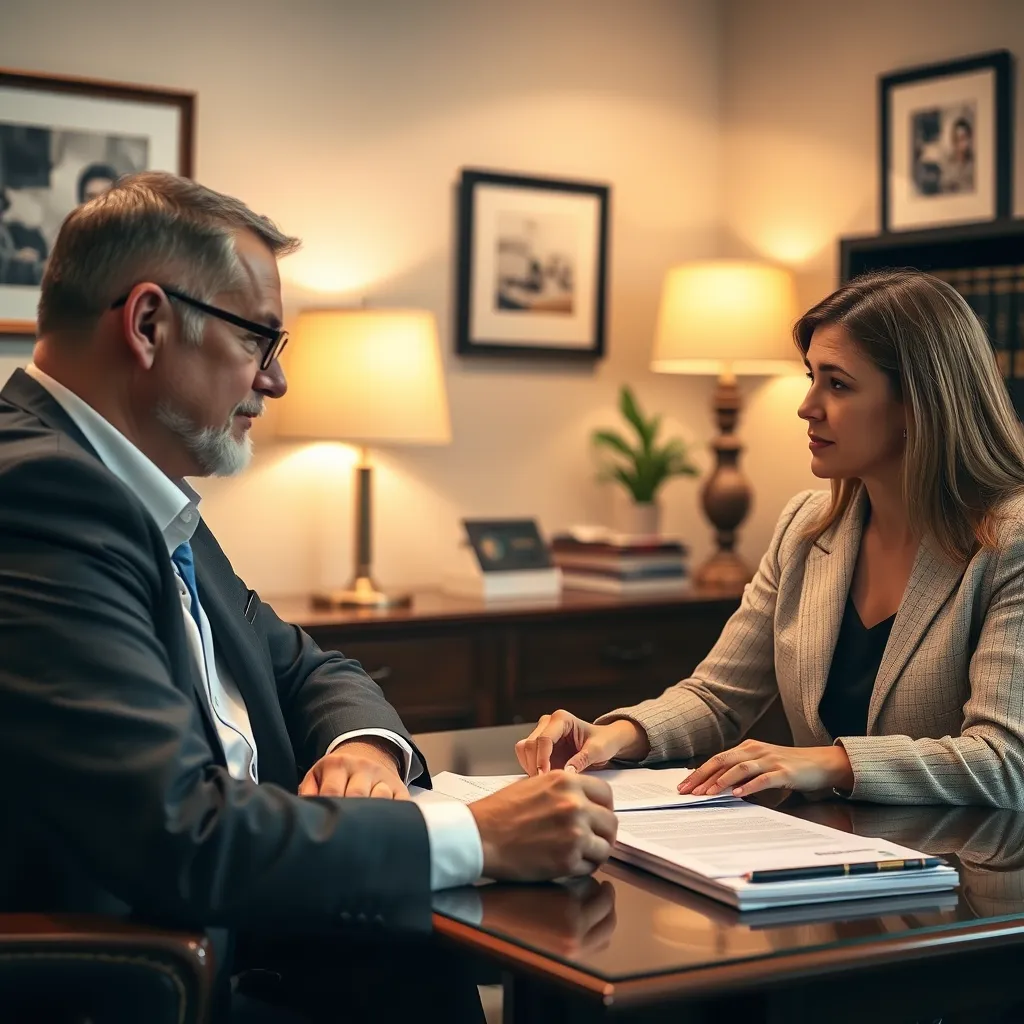
Separation Agreement Lawyer Fairfax, VA
In Fairfax, Virginia, a separation agreement—often called a property settlement agreement—is a written contract that resolves the legal and financial issues of a marital dissolution without the need for a contested trial. Under Virginia law, couples may use a separation agreement to address asset and debt division, spousal support, and, when appropriate, custody and child support. Because Virginia is an equitable distribution state, a valid separation agreement allows spouses to control the terms of their divorce rather than leaving those critical decisions to the court. The Fairfax County Circuit Court, located at 4110 Chain Bridge Road, and the Fairfax City Circuit Court at 10455 Armstrong Street both may incorporate a properly executed separation agreement into a final divorce decree, making it enforceable as a court order. The firm’s Fairfax location serves clients throughout the county and the City of Fairfax, including Burke, Centreville, Chantilly, Herndon, Reston, McLean, Vienna, Tysons, Springfield, and Annandale. Reach Law Offices Of SRIS, P.C. at (888) 437-7747 to request a consultation about your separation agreement. Law Offices Of SRIS, P.C. – Advocacy Without Borders.
What a Separation Agreement Means in Fairfax, VA
A separation agreement is a comprehensive contract between two spouses that settles the rights and obligations arising from their marriage. In Fairfax and across Virginia, these agreements typically cover the division of marital property and debts, the amount and duration of spousal support (alimony), and—if the parties have minor children—provisions for custody, visitation, and child support. Once both spouses sign the agreement and their signatures are notarized, it becomes a binding contract under Virginia law. Because the Commonwealth follows the principle of equitable distribution under Va. Code § 20-107.3, parties who enter into a written separation agreement are free to divide their assets and liabilities as they see fit, rather than having a judge apply the statutory factors and make the division.
The Fairfax County Circuit Court has exclusive jurisdiction over divorces and the equitable division of property, while the Fairfax County Juvenile and Domestic Relations District Court handles standalone custody, visitation, and support matters. A separation agreement that addresses all issues can be presented to the Circuit Court during an uncontested divorce proceeding. Under Va. Code § 20-91(9)(b), a no-fault divorce may be granted after six months of separation if the parties have no minor children and a signed separation agreement is in place; if there are minor children or no agreement, a one-year separation is generally required. The local courts in the Nineteenth Judicial District, including Fairfax City and the surrounding Northern Virginia communities, routinely enforce separation agreements that are fair, freely entered, and contain no evidence of fraud or unconscionability.
How Mr. Sris and the Firm’s Of Counsel Attorneys Handle Separation Agreement Cases
Legal counsel experienced in Virginia family law can help ensure that a separation agreement is thorough, enforceable, and tailored to each spouse’s circumstances. The firm’s approach begins with a detailed consultation to understand the financial landscape, parenting dynamics, and goals of the party seeking the agreement. From there, Mr. Sris and the firm’s Of Counsel attorneys work to identify all marital assets and debts, from real estate and retirement accounts to business interests and investment portfolios. They then draft an agreement that reflects the client’s priorities while complying with Virginia’s statutory and case-law requirements. Throughout the negotiation, they engage with the other side—whether the spouse or that spouse’s attorney—to resolve disputes and reach a consensual resolution.
Once both parties agree, the separation agreement is finalized, signed, and notarized. In many cases, it is then incorporated into a final decree of divorce, which gives the agreement the force of a court order and allows for enforcement through the Circuit Court if either party later fails to comply. The timeline for completing a separation agreement varies depending on the complexity of the marital estate and the willingness of the parties to cooperate. Throughout the process, the firm’s attorneys provide guidance on tax implications, retirement-account division, and other technical issues that, if mishandled, can carry long-term consequences. The goal is to deliver a clean, durable settlement that allows both spouses to move forward with clarity.
About Mr. Sris and the Firm’s Of Counsel Attorneys
Mr. Sris, Owner and Founder of Law Offices Of SRIS, P.C., has been practicing since 1997 and is admitted in Virginia, Maryland, the District of Columbia, New Jersey, and New York. A former prosecutor, Mr. Sris brings a sharp understanding of how evidence, contracts, and court procedures intersect. His legislative work includes testimony before the Virginia House Courts of Justice Committee in support of 2019 HB 635 (chief patron Del. David Bulova). Mr. Sris practices in family law and regularly handles separation-agreement negotiations for clients in Fairfax County and across Northern Virginia.
The firm’s Of Counsel attorneys augment the practice with their own backgrounds in litigation, negotiation, and family matters. Together, Mr. Sris and the firm’s Of Counsel attorneys bring extensive combined legal experience and have handled family law matters in Fairfax County and throughout Virginia since 1997. Results may vary. The firm’s Fairfax location serves clients throughout the Northern Virginia corridor. To reach Mr. Sris and the firm’s Of Counsel attorneys, call (888) 437‑7747.
Frequently Asked Questions
What is a separation agreement in Virginia?
A separation agreement is a legally binding written contract that resolves the financial, property, and (if applicable) child‑related issues between spouses who are separating or intend to divorce. In Virginia, the agreement can address the division of marital assets and debts, spousal support, child custody, visitation, and child support. It is also called a property settlement agreement. When properly executed—signed and notarized by both parties—it serves as a contract that can be enforced under Virginia law. If the agreement is later incorporated into a final divorce decree by the Fairfax County Circuit Court or the Fairfax City Circuit Court, it gains additional enforcement power as a court order.
Do I need a lawyer to draft a separation agreement in Fairfax?
No, Virginia law does not require you to hire an attorney to prepare a separation agreement, but obtaining experienced legal counsel is strongly advisable to protect your rights. An attorney can identify assets and debts that might be overlooked, ensure that the agreement complies with Virginia’s equitable distribution statutes, and draft provisions that are clear and enforceable. In Fairfax County, where complex marital estates involving retirement accounts, business interests, and real property are common, legal guidance can help avoid mistakes that could be costly to fix later. You can request a consultation with Law Offices Of SRIS, P.C. by calling (888) 437‑7747.
What can be included in a Fairfax separation agreement?
A separation agreement in Fairfax can cover virtually every aspect of the marital dissolution, including property division, spousal support, child custody and visitation schedules, child support, and the payment of attorney fees. The agreement may also address the disposition of the family home, the division of retirement accounts through a Qualified Domestic Relations Order, the allocation of debts, and any other matters the parties choose to resolve. The only limitations are that the agreement cannot dictate criminal consequences or waive certain statutory rights, and any provisions regarding children must serve the child’s best interests to be approved by the J&DR or Circuit Court.
Is a separation agreement legally binding in Virginia?
Yes, a properly executed separation agreement is a binding contract under Virginia law. Once both spouses sign the agreement in the presence of a notary, it becomes a contract that can be enforced in the civil courts. If the agreement is incorporated into a final divorce decree, it acquires the force of a court order, and violations can be addressed through contempt proceedings or other enforcement mechanisms in the Fairfax County Circuit Court. However, the agreement must be entered into voluntarily, with full disclosure of assets and debts, and it cannot be unconscionable or the product of fraud or duress.
Can a separation agreement be modified after it is signed?
A separation agreement can be modified only if both parties agree to the changes or if the agreement itself contains a provision allowing modification under certain conditions. In Virginia, spousal support terms in a separation agreement are generally modifiable unless the agreement expressly states that spousal support is non‑modifiable. Child custody and support provisions, even if included in a separation agreement, are always subject to modification based on a material change in circumstances and the best interests of the child. Any modification must be documented in a written amendment signed and notarized by both parties.
How does a separation agreement affect the divorce process in Fairfax?
A separation agreement can significantly streamline the divorce process in Fairfax by resolving all contested issues before the divorce complaint is filed. With a signed agreement in place, spouses can pursue an uncontested divorce under Va. Code § 20‑91(9)(b), which permits a divorce after six months of separation if there are no minor children and the agreement resolves all property and support matters. This generally reduces the time, cost, and emotional strain associated with a contested divorce. The agreement is filed with the Fairfax County Circuit Court, and if the court finds it fair and voluntary, it will be incorporated into the final decree.
Related family law services: Fairfax County Family Law | Falls Church Family Law | Prince William County Family Law
For official Virginia legal resources, visit: Virginia Code Title 20 – Family Law, Fairfax County Circuit Court, and Fairfax General District Court.
Attorney advertising. Prior results do not guarantee a similar outcome. Results may vary.
Case results depend on a variety of factors unique to each case.