
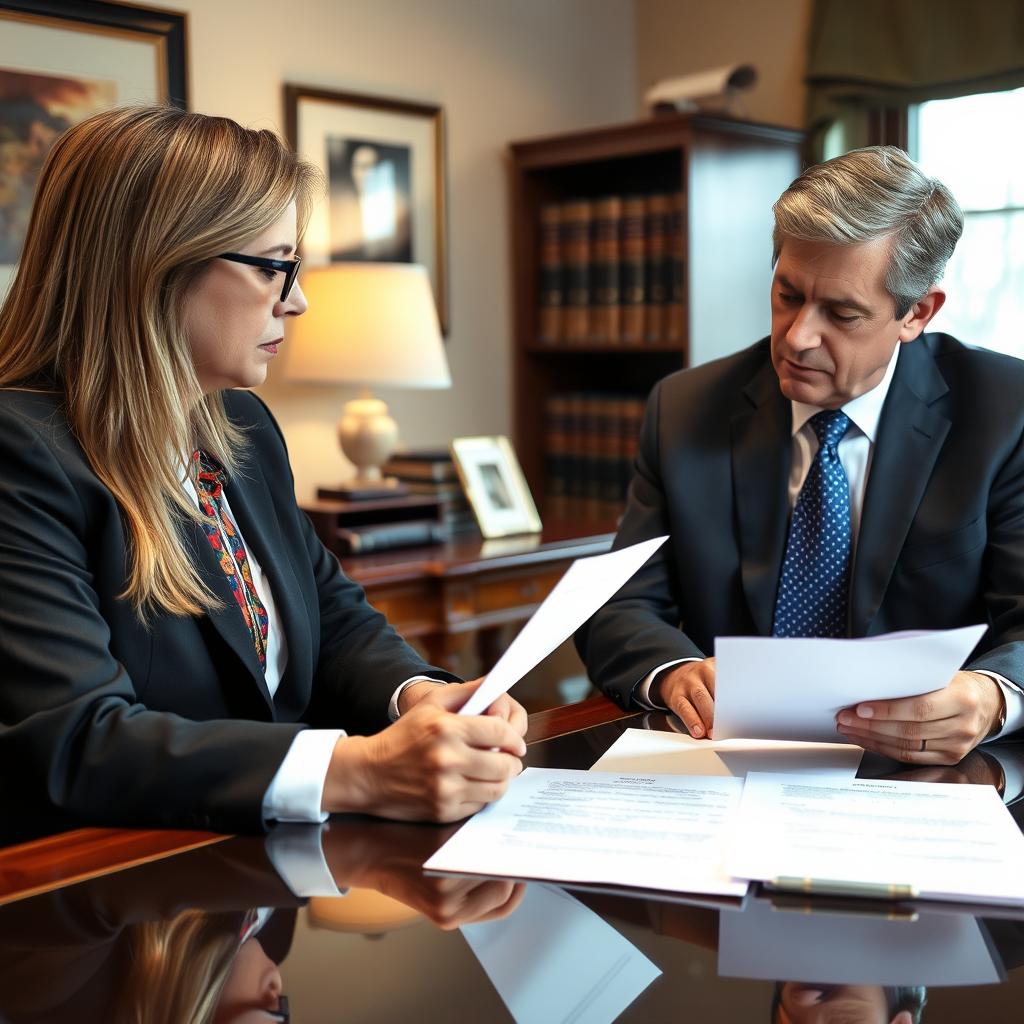
Property Division Lawyer Louisa County, VA
When a marriage ends in Virginia, the division of property can be one of the most significant aspects of the divorce. Louisa County, part of the 16th Judicial District, handles family law matters through the Louisa County Circuit Court (for divorce and equitable distribution) and the Louisa County Juvenile & Domestic Relations District Court (for custody, support, and protective orders). Mr. Sris and the firm’s Of Counsel attorneys represent clients throughout Louisa County—including Louisa, Mineral, and Zion Crossroads—in property division matters. Whether the marital estate includes a family business, retirement accounts, real estate, or other assets, having an experienced property division lawyer helps ensure that your interests are protected under Virginia’s equitable distribution law. To discuss your property division case, reach Law Offices Of SRIS, P.C. at (888) 437-7747.
What Property Division Means in Louisa County, Virginia
Virginia is an equitable distribution state, not a community property state. This means that marital property is divided fairly—but not necessarily equally—upon divorce. The Louisa County Circuit Court, located at 100 West Main Street in Louisa, has exclusive jurisdiction over all divorce actions, including the division of property and debts. Under Va. Code § 20-107.3, the court must classify property as either separate (belonging to one spouse, such as property owned before marriage or received by gift or inheritance) or marital (acquired during the marriage by either spouse). After classification, the court values the property and then determines an equitable distribution based on statutory factors.
The 11 factors the court considers include the duration of the marriage, the contributions of each spouse to the family’s well-being, the age and health of the parties, the circumstances contributing to the dissolution, and the tax consequences of any division. The court also looks at how and when the property was acquired, the debts of each spouse, and the liquid or non-liquid nature of the assets. In Louisa County, these proceedings occur in the Circuit Court, and many family law matters also involve temporary relief, spousal support, and child-related issues that are addressed at the Juvenile & Domestic Relations District Court. Our Richmond location serves Louisa County residents, and Mr. Sris and the firm’s Of Counsel attorneys appear regularly in the local courts.
Property division can become particularly complex when the marital estate includes a family business, professional practice, multiple real estate holdings, substantial retirement accounts, or overseas assets. The equitable distribution process may require the use of forensic accountants, business valuation attorneys, or other professionals to ensure that all marital property is identified and properly valued. Having an attorney who understands local court procedures and the nuances of Virginia’s equitable distribution law can make a significant difference in achieving a fair resolution.
How Mr. Sris and the Firm’s Of Counsel Attorneys Handle Property Division Cases
Mr. Sris and the firm’s Of Counsel attorneys approach property division with a thorough and methodical process designed to protect your interests. The first step is to identify all assets and debts, both marital and separate. This often involves reviewing financial records, tax returns, business documents, and retirement account statements. When necessary, the firm engages independent attorneys, such as forensic accountants or business valuation professionals, to uncover hidden assets or assess the true value of a business.
Once the marital estate is inventoried, the next step is classification—determining which assets are marital and which are separate. In Virginia, the burden is on the party claiming an asset is separate property to prove it. Mr. Sris and the firm’s Of Counsel attorneys have extensive experience handling disputed classification issues, including tracing commingled assets and evaluating the source of funds used to acquire property during the marriage. After classification, the team works to negotiate a settlement that considers the statutory factors and your priorities. If a settlement cannot be reached, the firm is prepared to litigate the matter in the Louisa County Circuit Court. The attorneys present evidence and arguments to the court to advocate for an equitable outcome.
About Mr. Sris and the Firm’s Of Counsel Attorneys
Mr. Sris, Owner and Founder of Law Offices Of SRIS, P.C., is a former prosecutor with decades of courtroom experience. He is admitted to practice in Virginia, Maryland, the District of Columbia, New Jersey, and New York. Mr. Sris testified before the Virginia House Courts of Justice Committee in support of 2019 HB 635 (chief patron Del. David Bulova). The firm’s Of Counsel attorneys bring additional legal backgrounds and experience in family law and litigation. Together, Mr. Sris and the firm’s Of Counsel attorneys bring extensive combined legal experience to property division matters. Results may vary. The firm has been practicing since 1997 and represents clients across multiple states.
Law Offices Of SRIS, P.C. serves Louisa County from our Richmond location. Consultations are available by appointment. To speak with Mr. Sris about your property division case, call (888) 437-7747.
Frequently Asked Questions About Property Division in Louisa County
How does Virginia handle property division in a divorce?
Virginia is an equitable distribution state, meaning marital property is divided fairly but not necessarily equally. The court considers 11 statutory factors under Va. Code § 20-107.3, including the length of the marriage, each spouse’s contributions, and the cause of the dissolution. Separate property—assets owned before marriage or received as a gift or inheritance—is not subject to division. The Louisa County Circuit Court has exclusive jurisdiction over property division and will issue a final order as part of the divorce decree.
What types of property are subject to division in a Louisa County divorce?
Marital property includes all assets and debts acquired during the marriage, regardless of whose name is on the title. This can include real estate, bank accounts, retirement accounts, vehicles, business interests, and even debts racked up by either spouse. Separate property is generally excluded, but if separate property has been commingled with marital property (such as depositing an inheritance into a joint account), it may become marital or at least partially marital. Disputes often arise over classification, and a Louisa County property division lawyer can help protect your separate assets.
What factors does the court consider when dividing property?
The court evaluates 11 statutory factors listed in Va. Code § 20-107.3. These factors include the contributions (monetary and nonmonetary) of each spouse to the well-being of the family, the duration of the marriage, the ages and health of the parties, the circumstances that led to the divorce, how and when the property was acquired, the debts of each spouse, the liquid or illiquid nature of the assets, and the tax consequences of a proposed division. The judge has broad discretion to weigh these factors, and an experienced attorney can present evidence to highlight the factors that favor your position.
Can we agree on property division without going to court?
Yes, couples can resolve property division through a written separation agreement (also called a property settlement agreement). This agreement can address all property, debts, spousal support, and other issues. If the agreement is signed by both parties and approved by the court, it becomes a binding contract and is incorporated into the final divorce decree. Many Louisa County divorce cases are resolved this way, avoiding the expense and time of trial. However, it is important to have independent legal advice before signing any agreement to ensure that your rights are fully protected.
How are retirement accounts divided in a Virginia divorce?
Retirement accounts, including 401(k)s, IRAs, and pensions, are marital property to the extent they were accrued during the marriage. The division of these accounts often requires a Qualified Domestic Relations Order (QDRO) to avoid tax penalties and ensure proper payout. Mr. Sris and the firm’s Of Counsel attorneys work with financial professionals to value the accounts and draft the necessary QDROs. The court may award a percentage of the marital share to each spouse, or offset the retirement account’s value with other assets. Proper handling of retirement division is critical; mistakes can have long‑term financial consequences.
What if my spouse is hiding assets in a Louisa County divorce?
Virginia law requires full financial disclosure in divorce, and attempts to conceal assets can be challenged through discovery and forensic accounting. If you suspect your spouse is hiding assets—such as transferring money to a friend, underreporting business income, or moving funds offshore—you should inform your attorney immediately. The firm can request bank records, tax returns, and other documents, and may engage a forensic accountant to trace assets. If the court finds that one spouse deliberately concealed marital property, it may award a greater share of the property to the other spouse as a remedy.
Explore related family law resources: Divorce Lawyer Richmond VA, Child Custody Lawyer Fairfax VA – India is not a signatory to the 1980 Hague Convention on Civil Aspects of International Child Abduction., Spousal Support Lawyer Virginia Beach VA, Family Law Lawyer Norfolk VA.
For official information, see the Virginia Code § 20-107.3 (Equitable distribution statute) and the Louisa County Circuit Court (Virginia Judicial System).
Attorney advertising. Prior results do not guarantee a similar outcome. Results may vary. Law Offices Of SRIS, P.C. Practices in Virginia, Maryland, the District of Columbia, New Jersey, and New York. Consultation by appointment. Call (888) 437-7747.
Case results depend on a variety of factors unique to each case.