
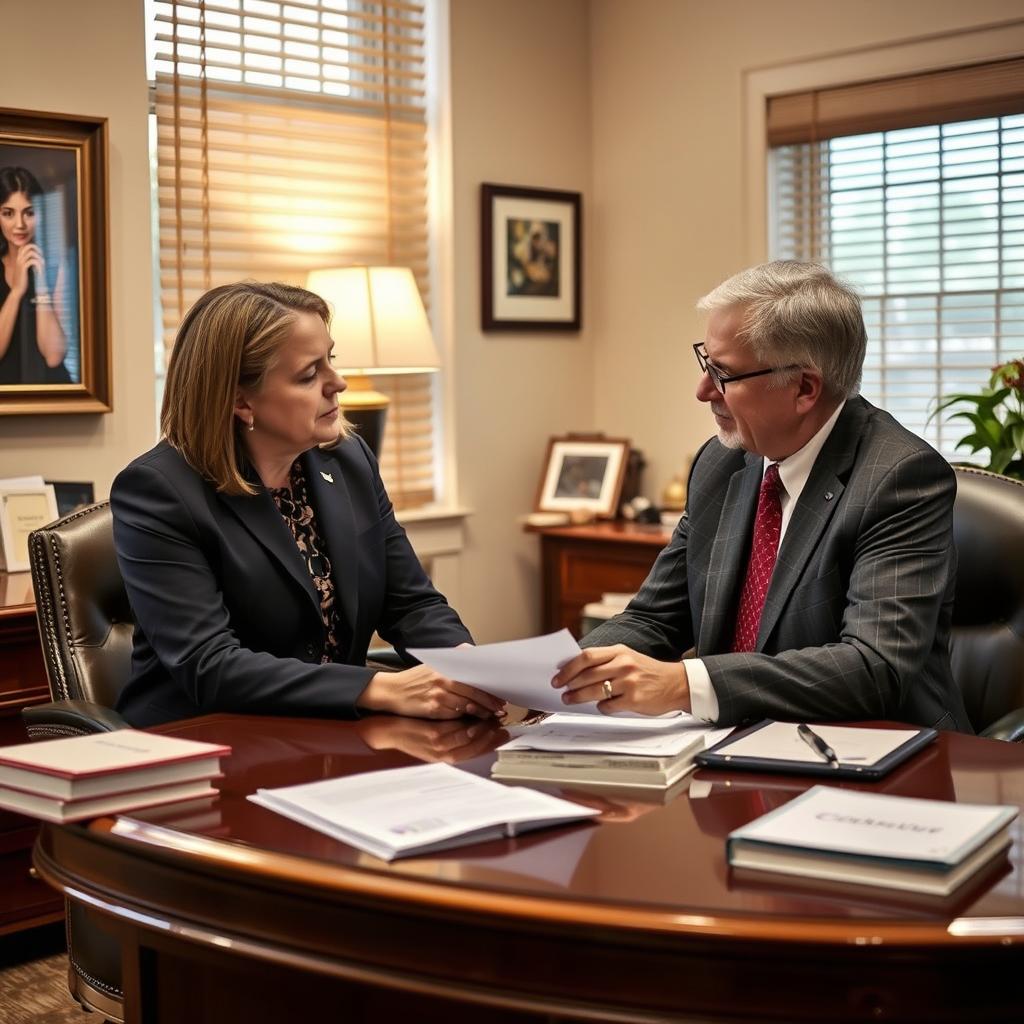
Paternity Lawyer Fauquier County, VA
Establishing or challenging paternity in Fauquier County affects a child’s legal relationship with a parent—and with it, custody, visitation, and financial support obligations. The process involves both the Virginia statutory framework under Va. Code § 20‑49.1 et seq. and the local procedures of the Fauquier County Juvenile and Domestic Relations District Court, which hears standalone paternity, custody, and support matters at 6 Court Street, Warrenton, Virginia. When paternity is raised within a divorce or equitable‑distribution proceeding, the Fauquier County Circuit Court handles those issues under the same statutory standards. Whether you are a mother seeking to establish a child’s legal father for support purposes, a father wanting to secure parental rights, or a party contesting a presumption of paternity, the decisions made in these Fauquier County courtrooms have long‑term consequences for your family. Mr. Sris and his Of Counsel at Law Offices Of SRIS, P.C. concentrate in Virginia family law and regularly appear in Fauquier County on behalf of parents and children. We work to help clients understand their options, navigate the court process, and present the evidence necessary to protect their interests. For a consultation about your paternity matter, reach Law Offices Of SRIS, P.C. at (888) 437‑7747. Law Offices Of SRIS, P.C. – Advocacy Without Borders.
What Paternity Law Means in Fauquier County
Virginia law defines paternity as the legal relationship between a father and a child born to unmarried parents. A child’s birth certificate alone does not create a legal father‑child bond until paternity is established by one of the procedures set out in Va. Code § 20‑49.1 and related sections. Once established, paternity carries rights and responsibilities: the father may seek custody and visitation, and the court may order child support based on the Virginia child‑support guidelines. Paternity also affects a child’s eligibility for health insurance, inheritance, and federal benefits. The legal framework applies uniformly across the Commonwealth, but each locality—including Fauquier County—has its own courtroom practices, filing protocols, and judicial assignments that shape how a case unfolds.
In Fauquier County, the Juvenile and Domestic Relations District Court is the venue for most initial paternity petitions. That court, located at 6 Court Street in Warrenton, handles cases involving unmarried parents, allegations of non‑paternity, voluntary acknowledgments of paternity, and the resulting support and custody orders. If a paternity question arises in the context of a divorce, the Fauquier County Circuit Court addresses it as part of the broader family law proceeding. Mr. Sris and his Of Counsel are familiar with the filing requirements, local forms, and procedural expectations of both courts. Because the Juvenile and Domestic Relations Court does not have jury trials and its judges have broad discretion to weigh competing testimony, experienced representation that knows how to present medical‑genetic evidence, lay‑witness testimony, and documentary records can influence the outcome of a contested paternity matter.
How Mr. Sris and His Of Counsel Handle Paternity Cases
Law Offices Of SRIS, P.C. takes a client‑centered approach to paternity matters, recognizing that every case involves deeply personal family dynamics. Mr. Sris and his Of Counsel team begin by understanding the client’s goals—whether that is to establish a legal connection between a father and child, to challenge an erroneous presumption of paternity, or to resolve support and custody questions that flow from a paternity determination. We gather relevant documents, identify potential witnesses, and assess whether genetic testing through a court‑ordered or privately arranged DNA analysis is appropriate. The firm coordinates with accredited laboratories and ensures that any test results meet the evidentiary standards required by the Virginia courts.
Once the factual picture is clear, Mr. Sris and his Of Counsel prepare the necessary pleadings and motions for the appropriate Fauquier County court. In uncontested cases where both parties agree on paternity, we facilitate the voluntary acknowledgment process or a consent order so that legal parentage can be formalized with minimal court involvement. When paternity is disputed, we represent the client at evidentiary hearings, present witness testimony, and cross‑examine opposing witnesses. Throughout the process, the team keeps the focus on the child’s best interests while protecting the client’s parental rights and financial obligations. Because Mr. Sris and his Of Counsel have extensive experience in Virginia family law, they can also advise on related matters such as custody modifications, visitation schedules, and child‑support enforcement that may be affected by the paternity determination.
About Mr. Sris and His Of Counsel Team
Mr. Sris, Owner and Founder of Law Offices Of SRIS, P.C., has practiced family law in Virginia since 1997. A former prosecutor, he brings insight into the courtroom dynamics that play out in contested family law matters. His legislative involvement includes testifying before the Virginia House Courts of Justice Committee in support of 2019 HB 635 (chief patron Del. David Bulova). He is admitted to practice in Virginia, Maryland, the District of Columbia, New Jersey, and New York. Mr. Sris is joined by an accomplished group of Of Counsel attorneys who collectively bring over 120 years of combined legal experience. Results may vary. Together, Mr. Sris and his Of Counsel have documented 4,739+ case results across all practice areas since 1997.
Frequently Asked Questions
How is paternity established in Virginia?
Paternity in Virginia can be established either voluntarily—by both parents signing an Acknowledgment of Paternity form—or through a court proceeding under Va. Code § 20‑49.1 et seq. The voluntary acknowledgment is often completed at the hospital when the child is born or later at the Division of Vital Records. If the parents disagree or if a party seeks to challenge paternity, a case may be filed in the Juvenile and Domestic Relations District Court of the county where the child resides. The court can order genetic testing, typically a DNA test using a cheek swab from the mother, the child, and the alleged father. If the test shows a probability of paternity of 98% or higher, the court will ordinarily enter an order establishing paternity, which then triggers rights and obligations including custody, visitation, and child‑support calculations.
Can a father establish paternity without going to court?
Yes, an unmarried father and mother may establish paternity voluntarily by signing a Virginia Acknowledgment of Paternity form, which is then filed with the Virginia Division of Vital Records. The acknowledgment carries the same legal effect as a court order once it is executed and filed, granting the father the right to seek custody or visitation and imposing child support obligations. Both parents must sign the form voluntarily and consensually. If either parent is uncertain or if there is a dispute about the child’s parentage, the voluntary process is not appropriate, and a court action should be initiated instead. It is advisable to review the document with an experienced family law attorney before signing, because it creates permanent legal consequences.
What rights does a father gain after establishing paternity?
Once paternity is established, a father has the right to petition the Fauquier County Juvenile and Domestic Relations District Court for custody and visitation, and he assumes the obligation to provide financial support for the child according to the Virginia guidelines. The court applies the same best‑interests‑of‑the‑child factors under Va. Code § 20‑124.3 that it would use for any custody determination. In addition, the child gains legal rights to inheritance from the father, eligibility for health insurance coverage, and access to federal benefits such as Social Security and veterans’ benefits. A father who has established paternity may also participate in decisions about the child’s education, healthcare, and religious upbringing, although the specific allocation of decision‑making authority will be set out in a custody or visitation order.
What happens if a paternity test is refused?
If a party refuses to submit to court‑ordered genetic testing in a Virginia paternity case, the court may draw an adverse inference against that party and can enter a default order establishing paternity based on the available evidence. Va. Code § 20‑49.3 allows the court to compel genetic testing when paternity is contested, and a party’s unjustified refusal can be treated as an admission of paternity. The court will then proceed to determine the legal consequences, including support and custody. Refusing a test does not make the case go away; instead, it can severely weaken the refusing party’s position. An experienced family law attorney can help present other evidence, but the refusal itself may become a significant factor in the judge’s ruling.
How long does a paternity case take in Fauquier County?
The timeline for a paternity case in Fauquier County varies depending on whether the case is contested, the availability of genetic testing results, and the court’s calendar. An uncontested voluntary acknowledgment can be completed in a matter of weeks once the paperwork is processed. When court action is necessary and both parties cooperate with DNA testing, the process from filing to a final order may still vary based on how quickly the test results are returned and when a hearing can be scheduled. Contested cases that involve multiple evidentiary hearings—for example, when custody and support are also disputed—can extend the timeframe. Mr. Sris and his Of Counsel work to move cases forward efficiently while ensuring that all necessary evidence is gathered and presented. For guidance on your specific situation, reach Law Offices Of SRIS, P.C. at (888) 437‑7747.
Do I need a lawyer for a paternity case in Fauquier County?
Virginia law does not require you to have a lawyer in a paternity case, but the legal issues that arise—genetic testing standards, child‑support guidelines, custody factors, and evidentiary rules—make self‑representation difficult. A paternity determination has long‑term effects on a parent’s rights, a child’s financial future, and the family’s relationships. An experienced family law attorney can help you understand the applicable law, negotiate a voluntary acknowledgment if that is in your interest, or represent you at contested hearings. The informal, judge‑decided setting of the Juvenile and Domestic Relations District Court places a premium on clear presentation of evidence and a thorough grasp of the statutory standards. Mr. Sris and his Of Counsel bring that experience to every Fauquier County paternity matter.
Family law pages for nearby counties:
Fairfax County ·
Prince William County ·
Stafford County ·
Loudoun County ·
Arlington County
Primary sources:
Virginia Code Title 20 (Domestic Relations) ·
Fauquier County Circuit Court ·
Virginia Juvenile and Domestic Relations District Courts
Attorney advertising. Prior results do not guarantee a similar outcome. Results may vary.
Case results depend on a variety of factors unique to each case.