
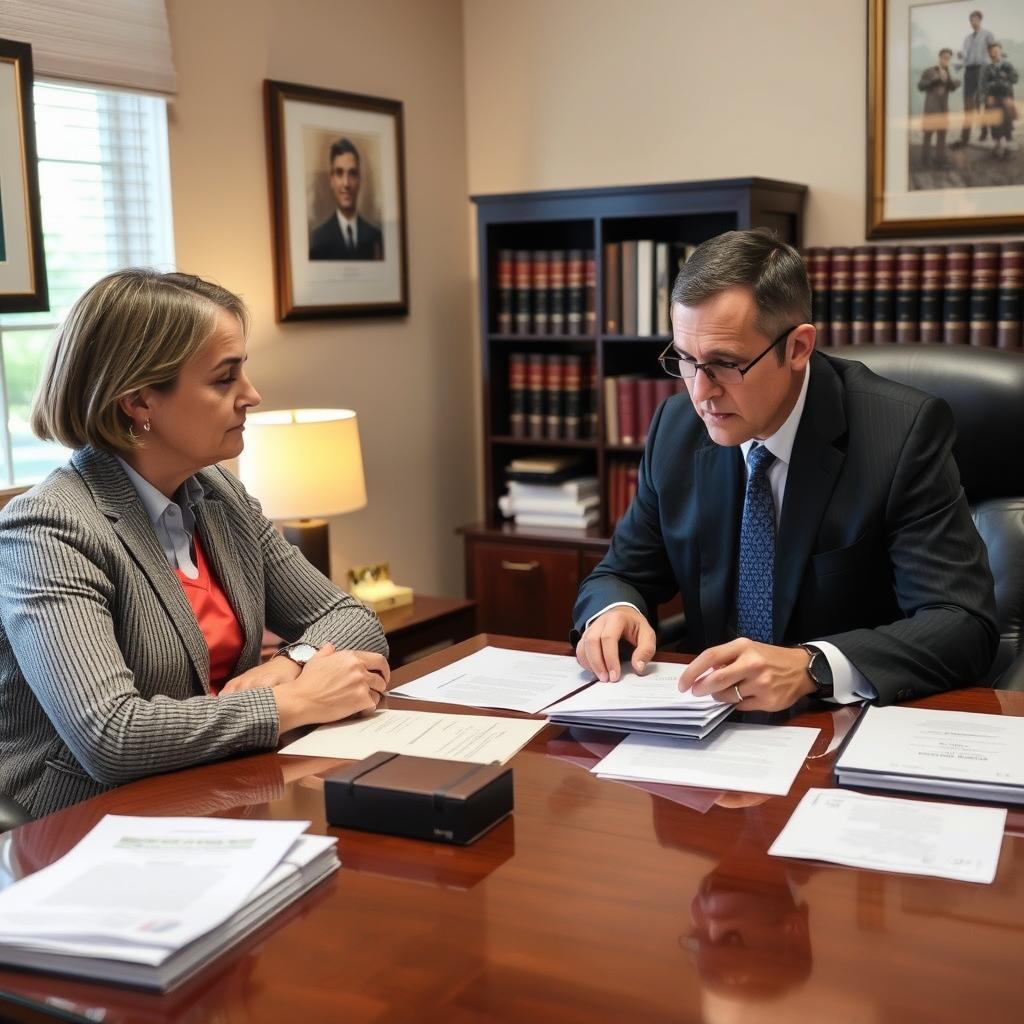
Visitation Enforcement Lawyer Fluvanna County, VA
When a court‑ordered visitation schedule breaks down, the parent denied time with a child needs a clear path to enforcement. In Fluvanna County, visitation enforcement matters are handled by the Juvenile and Domestic Relations District Court for standalone custody and visitation orders, or by the Circuit Court when the visitation provision is part of a divorce or equitable distribution decree. Law Offices Of SRIS, P.C. Concentrates its practice on family law and helps parents throughout Fluvanna County pursue enforcement of existing visitation orders. Mr. Sris and his Of Counsel represent custodial and non‑custodial parents in show‑cause proceedings, contempt actions, and motions to compel compliance under Virginia law. Our Shenandoah location at 505 N Main Street, Suite 103, Woodstock, Virginia serves Fluvanna County clients. Contact Law Offices Of SRIS, P.C. at (888) 437‑7747 to discuss your visitation enforcement matter. Law Offices Of SRIS, P.C. – Advocacy Without Borders.
Visitation Enforcement in Fluvanna County, Virginia
Visitation enforcement in Fluvanna County builds on Virginia’s statutory framework. Under Va. Code § 20‑124.2, a court issuing a custody or visitation order retains continuing jurisdiction to enforce it. The Juvenile and Domestic Relations District Court — located at 72 Main Street, Suite B, Palmyra, Virginia 22963 — hears standalone custody and visitation enforcement matters, while the Circuit Court handles enforcement within ongoing divorce cases. The process typically begins with a motion to show cause, which asks the court to order the non‑complying parent to explain why they should not be held in contempt. The court then evaluates whether the violation was willful and whether the existing order can still serve the child’s best interests — a standard that turns on the ten factors enumerated in Va. Code § 20‑124.3. Practitioners familiar with the Sixteenth Judicial District know that the Fluvanna County J&DR Court expects parties to bring detailed logs of missed visits, contemporaneous communication records, and a copy of the operative court order. The firm’s familiarity with local judicial expectations allows parents to present their enforcement requests in a way the court can act on efficiently.
Because visitation enforcement implicates the best interests of the child, a court may modify the existing order if enforcement alone cannot remedy the situation. Parents who seek enforcement should be prepared to demonstrate that the requested visitation schedule remains workable and that the child’s relationship with both parents is supported. Mediation is available but not mandatory in Virginia; a judge may also refer the parties to a co‑parenting class or appoint a Guardian ad Litem to investigate if concerns about the child’s welfare arise. In Fluvanna County, parents often combine an enforcement petition with a request for make‑up visitation time or for a specific, detailed schedule that reduces ambiguity. The firm approaches each enforcement matter with an understanding of both the procedural requirements at the J&DR Court and the substantive factors under Title 20 of the Virginia Code.
How Mr. Sris and His Of Counsel Handle Visitation Enforcement Cases
Mr. Sris and his Of Counsel evaluate a visitation enforcement case by examining the existing order, the evidence of non‑compliance, and any defenses the opposing party may raise. Common defenses include allegations that the visiting parent poses a risk to the child, that the child refuses to visit, or that the order is unclear. The firm works to distinguish between a genuine parenting dispute and a willful violation. When appropriate, counsel prepares a motion to show cause and requests that the court hold the non‑complying parent in civil contempt — a remedy that can include make‑up visitation time, monetary sanctions, or, in extreme cases, a change in custody. Throughout the process, the team keeps the focus on restoring the parent‑child relationship, not on punitive measures, consistent with Virginia’s best‑interests standard.
The enforcement timeline in Fluvanna County depends on the court’s calendar and the complexity of the underlying dispute. After filing, the clerk generally sets a hearing date within a timeframe that varies by docket congestion. Mr. Sris and his Of Counsel prepare parents to testify about missed visits, present corroborating evidence, and propose a concrete solution. When the other parent raises a defense such as an alleged change in circumstances, counsel may request that the court modify the order rather than simply enforce it, so that the new schedule better serves the child’s current needs. Every step is taken with the recognition that visitation enforcement, when handled properly, can stabilize a co‑parenting relationship without escalating conflict.
About Mr. Sris and His Of Counsel Team
Mr. Sris, Owner and Founder of Law Offices Of SRIS, P.C., has practiced family law since founding the firm in 1997. He is a former prosecutor, admitted in Virginia, Maryland, the District of Columbia, New Jersey, and New York. Mr. Sris testified before the Virginia House Courts of Justice Committee in support of 2019 HB 635 (chief patron Del. David Bulova). His Of Counsel — experienced attorneys engaged through Excella — bring over 120 years of combined legal experience between Mr. Sris and his Of Counsel. Results may vary. The team has documented 4,739+ case results across all practice areas since 1997. Mr. Sris and his Of Counsel handle visitation enforcement matters throughout Fluvanna County from the firm’s Shenandoah location.
Frequently Asked Questions
How does a Virginia lawyer defend against visitation enforcement charges?
An experienced family law attorney defends against visitation enforcement charges by examining whether the alleged violation was willful, challenging the sufficiency of the evidence, and asserting statutory defenses under Va. Code § 20‑124.2. If the respondent parent believed in good faith that the visitation would endanger the child, they may argue that their refusal was not contemptuous. Counsel may also show that the order is ambiguous, that the moving party waived enforcement through conduct, or that a material change in circumstances warrants a modification instead of contempt sanctions. In Fluvanna County, the Juvenile and Domestic Relations Court has discretion to fashion a remedy that serves the child’s best interests, so a defense that focuses on the child’s welfare often carries weight.
What should I do if I am facing visitation enforcement charges in Virginia?
If you are facing visitation enforcement charges in Virginia, you should consult a family law attorney promptly, gather all court orders and communication records, and avoid unilateral actions that could be seen as further violations. Do not attempt to explain your position to the other parent’s attorney or to the court without legal counsel. The court will evaluate whether you willfully failed to comply with a clear order, so your records of attempted compliance, reasons for any missed visits, and any safety concerns you hold should be organized. Preserving text messages, emails, and a visitation log can help your attorney present a response to the show‑cause order. Acting quickly is important because a finding of contempt can result in make‑up visitation, fines, or even a change of custody.
What is visitation enforcement in Virginia family law?
Visitation enforcement is the legal process by which a parent asks the court to compel the other parent to comply with an existing visitation order, usually through a motion to show cause or a contempt petition under Va. Code § 20‑124.2. The court retains continuing jurisdiction to enforce its custody and visitation orders. Common grounds include repeated denial of scheduled visits, interference with court‑ordered parenting time, or refusal to allow make‑up visits. In Fluvanna County, these petitions are heard in the Juvenile and Domestic Relations District Court when the order is a standalone visitation order, or in the Circuit Court if the visitation terms are part of a divorce decree. The judge may use contempt powers, award attorney’s fees, or modify the order to prevent future violations.
Can the court change visitation if one parent is not following the order?
Yes, a Virginia court can modify a visitation order when one parent habitually violates it, but only if the modification is in the child’s best interests as measured by the factors in Va. Code § 20‑124.3. The court may find that the existing arrangement is no longer workable and craft a new schedule that reduces conflict. In some cases, the court will order supervised visitation, a detailed holiday schedule, or a different exchange location to discourage future violations. When the non‑compliance is willful, the judge may also use contempt remedies alongside or instead of modification. Parents seeking a change should file a petition for modification separate from or in conjunction with the enforcement motion.
Do I need a lawyer for visitation enforcement in Fluvanna County?
While you are not legally required to have a lawyer to file a visitation enforcement petition in Fluvanna County, Virginia, an experienced attorney helps you build a record that supports your request and navigate local court procedures. Enforcement proceedings require you to present evidence, examine witnesses, and argue why the court should hold the other parent in contempt. Procedural mistakes can delay relief. Mr. Sris and his Of Counsel are familiar with the Fluvanna County Juvenile and Domestic Relations Court’s practices and can prepare the necessary pleadings, organize documentation of denied visits, and advocate for a remedy that restores your time with your child. Contact Law Offices Of SRIS, P.C. at (888) 437‑7747 to discuss your matter.
Attorney advertising. Prior results do not guarantee a similar outcome. Results may vary.
Case results depend on a variety of factors unique to each case.