
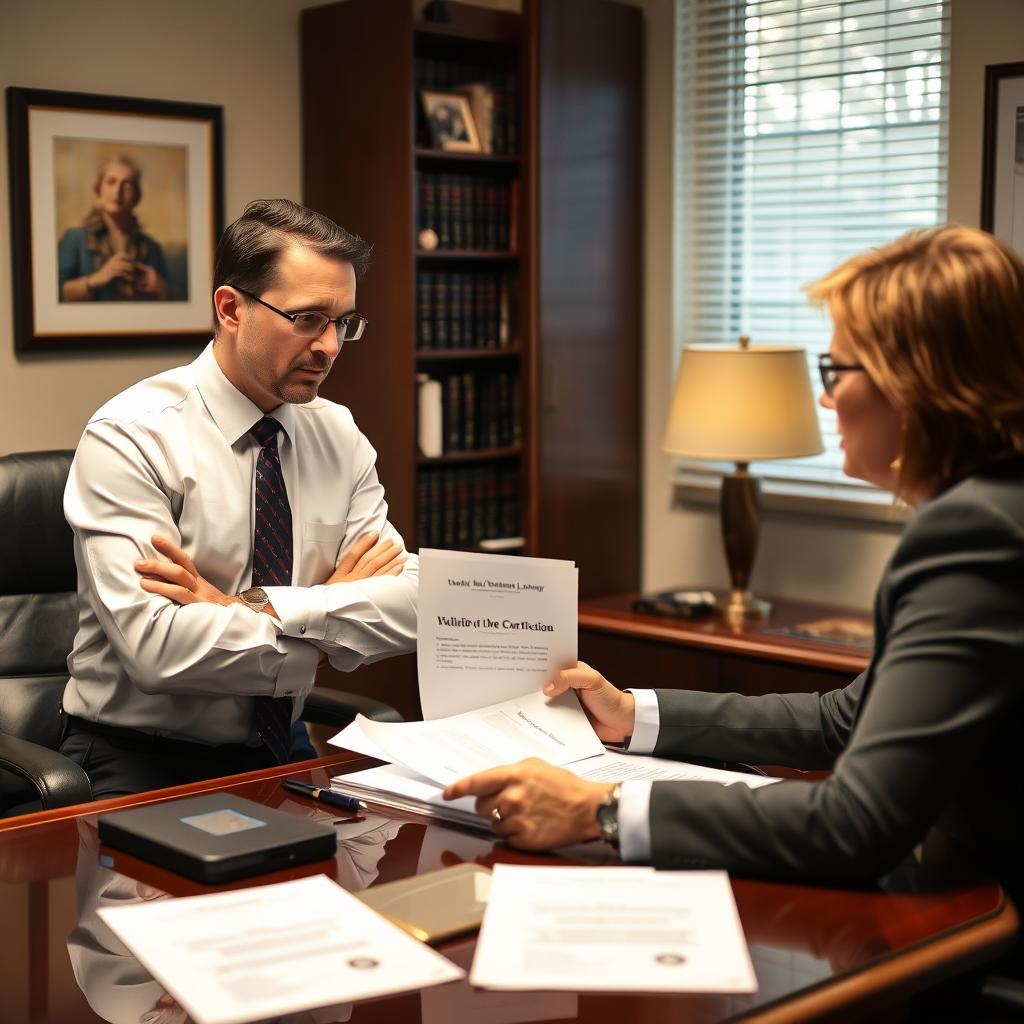
Felony Conviction Divorce Lawyer Virginia, VA
In Virginia, a spouse’s felony conviction and imprisonment can serve as a fault-based ground for divorce under Va. Code § 20-91. When one party is sentenced to confinement for more than one year following a felony conviction, the other spouse may seek a divorce without waiting through the standard separation periods required in no-fault cases. Mr. Sris and his Of Counsel team at Law Offices Of SRIS, P.C. represent clients across Virginia in family law matters that involve felony conviction grounds, including cases filed in Fairfax County Circuit Court, Prince William County Circuit Court, and courts throughout the Commonwealth. If you are considering a divorce based on a spouse’s felony conviction, call (888) 437-7747 to request a consultation. Law Offices Of SRIS, P.C. — Advocacy Without Borders.
Under Va. Code § 20-91, sentencing to confinement for more than one year for a felony is a fault ground for divorce in Virginia.
Source: Va. Code § 20-91. Virginia Code Title 20, Chapter 6, § 20-91
Reviewed by Mr. Sris, admitted in VA/MD/DC/NJ/NY.
What Felony Conviction Divorce Means in Virginia
Virginia is an equitable distribution state, and the division of marital property, spousal support, and child-related issues are handled alongside the divorce itself. When a spouse is convicted of a felony and sentenced to confinement for more than one year, the non-incarcerated spouse may file for divorce immediately on fault grounds, rather than waiting for the one-year separation period (or six-month separation with agreement and no minor children) required in no-fault cases. The divorce must be filed in the circuit court of the county or city where either party resides. In northern Virginia, for example, the Fairfax County Circuit Court at 4110 Chain Bridge Road, Suite 210, Fairfax, VA 22030 handles divorce filings for Fairfax County residents. Other circuit courts, such as Prince William County Circuit Court and Loudoun County Circuit Court, serve their respective jurisdictions.
Because the ground is fault-based, the filing spouse must prove the conviction and the length of the sentence. The court does not require a separate waiting period after the conviction; once the sentence exceeds the one-year threshold, the ground is established. However, the divorce process still involves procedural steps including filing a complaint, service of process, potential pendente lite hearings for temporary support or custody, and final adjudication of equitable distribution and support. Mr. Sris and his Of Counsel have experience handling these matters in Virginia circuit courts and can explain how the felony conviction ground affects the overall timeline and outcomes.
How Mr. Sris and His Of Counsel Handle Felony Conviction Divorce Cases
When a client seeks a divorce based on a spouse’s felony conviction, Mr. Sris and his Of Counsel begin by confirming the legal basis: the felony conviction and the length of the sentence. The team reviews the judgment order and sentencing documents, ensures the confinement period meets the statutory threshold, and discusses with the client any related custody, support, and property division concerns. Because the incarcerated spouse may have limited ability to participate in the proceedings, the firm addresses service of process complexities and, where appropriate, seeks pendente lite relief to stabilize the family’s financial situation during the pendency of the divorce.
The equitable distribution process examines all marital assets and debts, and the court applies the statutory factors to achieve a fair division. A spouse’s felony conviction and incarceration can influence the court’s analysis of contributions to the marriage and dissipation of assets. Mr. Sris and his Of Counsel work to present a complete picture of the marital estate and advocate for an equitable resolution. For cases involving children, custody and visitation are determined under the trusted-interests factors of Va. Code § 20-124.3, and the incarcerated parent’s circumstance is a relevant consideration.
About Mr. Sris and His Of Counsel Team
Mr. Sris, Owner and Founder of Law Offices Of SRIS, P.C., has practiced family law in Virginia since 1997. He is a former prosecutor and is admitted in Virginia, Maryland, the District of Columbia, New Jersey, and New York. Mr. Sris testified before the Virginia House Courts of Justice Committee in support of 2019 HB 635 (chief patron Del. David Bulova), a bill that affected equitable distribution procedures. His Of Counsel team includes attorneys with extensive experience in Virginia family law matters, including divorce litigation, complex property division, and child custody. Together, Mr. Sris and his Of Counsel bring over 120 years of combined legal experience, with 4,739+ documented firm-wide results. Results may vary.
Frequently Asked Questions
What is a felony conviction divorce in Virginia?
A felony conviction divorce is a fault-based divorce available when one spouse is convicted of a felony and sentenced to confinement for more than one year. Under Virginia law, this ground allows the other spouse to file for divorce immediately without the separation periods required for no-fault divorce. The ground is set out in Va. Code § 20-91 and does not require proof of misconduct beyond the conviction and sentence. The filing spouse must submit evidence of the conviction and the length of the sentence to the circuit court. This ground can affect property division, spousal support, and custody because the court may consider the incarcerated spouse’s ability to contribute and the circumstances of the offense.
Do I need a lawyer for a felony conviction divorce in Virginia?
You are not required to have a lawyer, but working with an attorney experienced in Virginia family law can help you navigate the procedural and evidentiary requirements. Establishing the ground requires proper documentation of the criminal case. An attorney can ensure the complaint is correctly filed, arrange service on the incarcerated spouse, and address issues like pendente lite relief, equitable distribution, and any child custody matters. Mr. Sris and his Of Counsel represent clients throughout Virginia in divorce cases involving felony conviction grounds. For guidance on your specific situation, reach Law Offices Of SRIS, P.C. at (888) 437-7747.
How long does a felony conviction divorce take in Virginia?
The timeline for a felony conviction divorce varies based on the court’s calendar, the complexity of the case, and whether the incarcerated spouse contests the divorce. Because the ground does not require a separation period, the divorce can proceed more quickly than a no-fault case, but contested issues such as property division, spousal support, or custody can extend the timeframe. The court schedules hearings and deadlines according to its docket, and cases involving an incarcerated party may require additional steps for participation. Mr. Sris and his Of Counsel work to move cases forward efficiently while protecting clients’ interests.
What happens to property and custody when a spouse is incarcerated?
Property is divided under Virginia’s equitable distribution rules, and custody is determined by the child’s best interests. The court classifies assets as marital or separate and distributes them based on the statutory factors. A spouse’s felony conviction and incarceration can influence the court’s consideration of contributions to the marriage and any dissipation of marital assets. For custody, the court applies the ten best-interests factors in Va. Code § 20-124.3, which may include the incarcerated parent’s ability to maintain a relationship with the child and the suitability of the home environment. To discuss the details of your matter, contact Law Offices Of SRIS, P.C. at (888) 437-7747.
Can I get spousal support in a felony conviction divorce?
Yes, spousal support may be awarded in a felony conviction divorce based on the statutory factors in Va. Code § 20-107.1. The court evaluates the need of the requesting spouse and the ability of the other spouse to pay, considering the duration of the marriage, the standard of living, the contributions of each party, and the circumstances that led to the divorce. A spouse’s incarceration may affect their ability to pay support, but the court can reserve jurisdiction to modify support when the incarcerated spouse is released and obtains income. An experienced family law attorney can explain how spousal support may be addressed in your situation.
Virginia family law overview | Fairfax County divorce lawyer | Prince William County divorce lawyer | Virginia equitable distribution attorney | Virginia child custody lawyer
Virginia Code § 20-91 · Virginia Circuit Courts
Attorney advertising. Prior results do not guarantee a similar outcome. Results may vary.
Case results depend on a variety of factors unique to each case.